

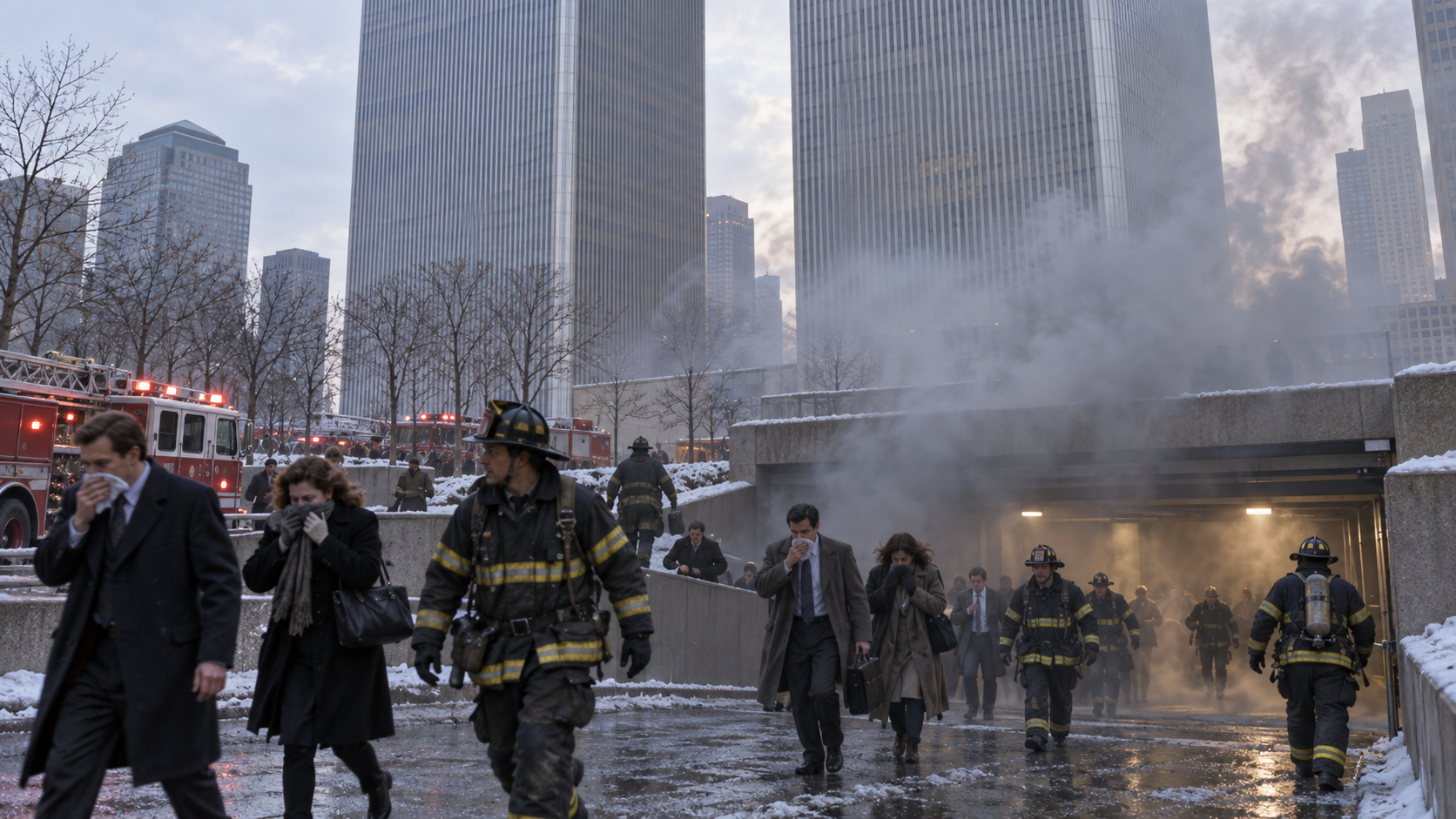
On This Day in News: February 26, 1993
On February 26, 1993, a truck bomb exploded in the underground parking garage beneath New York City's World Trade Center. The blast killed six people, including a pregnant woman, and injured more than a thousand. Smoke and power failure filled the towers, forcing tens of thousands of occupants to descend dark stairwells. Firefighters and other emergency personnel mounted a difficult rescue through the vast complex.
The attackers intended to cause far greater destruction, hoping the explosion would topple one tower into the other. The building structure held. Investigators traced a vehicle identification number from the damaged rental van and rapidly developed leads. Evidence connected the plot to a group of extremists including Ramzi Yousef, who fled the United States but was captured in Pakistan in 1995. Courts convicted multiple conspirators in separate trials.
The bombing revealed vulnerabilities in landmark buildings and demonstrated that international terrorism could produce mass casualties inside the United States. Emergency reviews led to changes in lighting, communications, evacuation procedures, garage access, and interagency planning. Survivors described long descents and uncertainty about whether help could reach upper floors, experiences that later influenced discussion of high-rise safety.
The 1993 attack was distinct from the September 11, 2001, attacks, though investigators and historians examine connections among extremist networks and lessons that were or were not absorbed. The six victims are memorialized with those killed eight years later. February 26 remains important because it combined a failed catastrophic ambition with very real loss, and because the response became an early test of modern terrorism investigation and skyscraper evacuation.
The device was placed below the towers, where the plotters believed the blast might compromise structural supports and cause progressive collapse.
The towers remained standing, but smoke, darkness, and disabled elevators created dangerous conditions for occupants on many floors.
A rental-vehicle record became a crucial investigative lead and helped authorities identify members of the conspiracy.
Later security changes improved preparedness but could not eliminate every risk in an open commercial complex serving thousands of people.
The prosecution demonstrated the value of international cooperation when Yousef was located abroad and returned for trial.
Remembering the 1993 victims prevents the attack from becoming merely a prelude to later events and preserves its own human history.
Explore more of "On This Day ..."
Discover more events from the same date across news, politics, technology, sports, and other fields. Each link highlights significant moments that shaped history on different fronts.