

On This Day in News: February 27, 2010
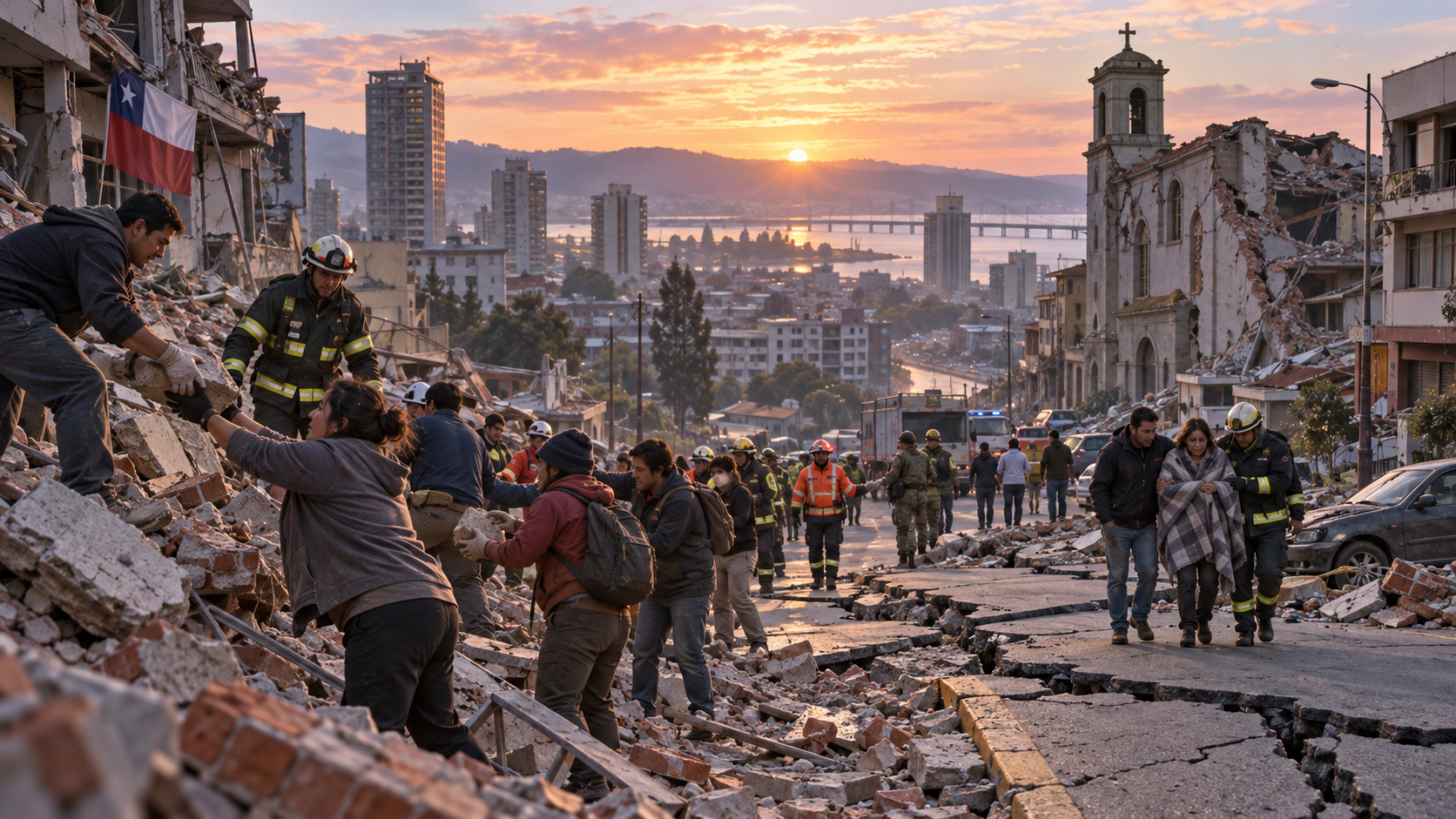
On February 27, 2010, a magnitude 8.8 earthquake struck off the coast of central Chile at 3:34 a.m. local time. Violent shaking lasted for several minutes across a wide region that included Concepción, Maule, and Santiago. Buildings and bridges collapsed, utilities failed, and coastal communities soon faced a tsunami. More than 500 people died, hundreds of thousands of homes were damaged, and economic losses reached tens of billions of dollars.
Chile lies along the boundary where the Nazca Plate moves beneath the South American Plate, making it one of the world's most seismically active countries. The 2010 rupture extended along hundreds of kilometers of the subduction zone and released extraordinary energy. Chile's experience with earthquakes and comparatively strong construction standards limited the death toll relative to the event's size, but weak buildings, infrastructure failures, and uneven enforcement still caused severe harm.
The tsunami became one of the disaster's most painful failures. Conflicting information and the cancellation of an initial warning left some coastal residents without clear direction. Waves struck fishing towns and islands, carrying buildings, vehicles, and debris inland. Communities also confronted shortages, damaged roads, prison escapes, and looting, prompting a military-supported emergency response and curfews in heavily affected areas.
Reconstruction required years of housing, transport, school, and health-system work. Investigations pushed improvements in tsunami warning procedures, public evacuation education, and emergency communication. Scientists gained valuable data about subduction earthquakes and aftershock patterns. February 27 shows that strong building codes can save many lives while gaps in warning and coordination still produce avoidable tragedy. Preparedness must connect engineering, trusted messages, local knowledge, and the ability to act immediately.
The earthquake occurred on a major subduction zone capable of producing both intense shaking and displacement of the seafloor.
Chile's long seismic history had encouraged stronger construction, but vulnerability varied by building age, design, and enforcement.
Tsunami waves reached the coast soon after the quake, leaving little time for centralized confirmation or distant instructions.
Confused official messaging became a major focus because residents needed clear permission to evacuate without delay.
Reconstruction combined national programs with local recovery, while debates continued over speed, quality, and unequal assistance.
The disaster's lasting lesson is that earthquake resilience depends on structures, communications, education, and community initiative together.
Explore more of "On This Day ..."
Discover more events from the same date across news, politics, technology, sports, and other fields. Each link highlights significant moments that shaped history on different fronts.