

On This Day in Pop: July 10, 1981
On July 10, 1981, Walt Disney Productions released The Fox and the Hound. Loosely adapted from Daniel P. Mannix’s novel, the animated feature followed Tod, an orphaned fox, and Copper, a hound dog raised to hunt. Their childhood friendship collides with the roles assigned to them by people, instinct and the adult world. The film balanced gentle rural comedy with scenes of danger and separation, building toward a climax in which loyalty survives even after companionship has become impossible. Voices including Mickey Rooney, Kurt Russell, Pearl Bailey and Jack Albertson gave the animals warmth, while the hand-painted landscapes maintained the studio’s tradition of storybook naturalism.
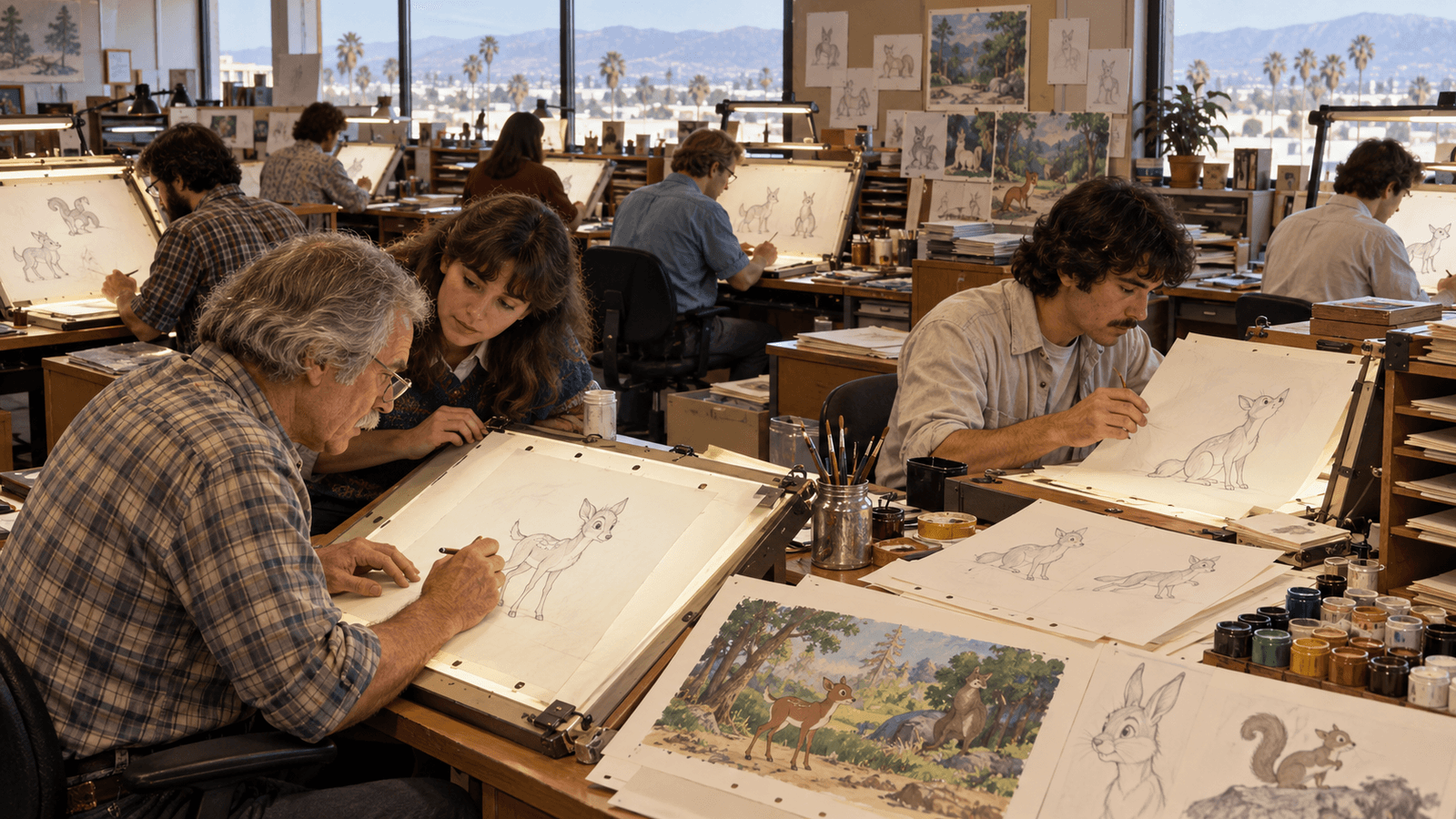
The opening mattered within Disney because production bridged two generations of animators. Several members of the studio’s veteran group known as the Nine Old Men contributed or advised, while younger artists—including figures who would later lead Disney animation or establish rival studios—took on greater responsibility. That transition was not smooth. Don Bluth and other artists left during production, taking colleagues with them and forcing the schedule to be reorganized. The finished film therefore carries institutional history inside a simple story about growing apart. Its themes of friendship constrained by inherited rules resonated with the studio’s own struggle between continuity and change.
The Fox and the Hound became a commercial success and later received a direct-to-video sequel, but its reputation often rests on emotional memory rather than franchise scale. Viewers remember the promise of lifelong friendship, the train sequence that sends Tod away and the recognition that affection does not always overcome social structure. The film arrived before the 1980s crisis and later renaissance reshaped Disney animation, making it a revealing midpoint rather than a clean beginning or end. July 10 marks a release about two animals who cannot return to childhood and a studio confronting the same truth. The craft tradition continued, but the people, economics and storytelling expectations surrounding it were already changing.
Remembering the fox and the hound opens in u.s. theaters on July 10 is valuable because anniversaries turn a familiar cultural object back into a specific decision, release or broadcast. The surrounding technology, business and audience conditions explain why the moment could happen then, while its later uses show that meaning never stops changing. Seen at that scale, the date is not trivia. It is a checkpoint between creation and memory: a place to separate what occurred from the legend accumulated around it and to ask why the work still attracts attention. That perspective also restores the labor of collaborators, distributors and audiences whose choices helped a single event travel beyond its first setting. Cultural history becomes clearer when the remembered icon is reconnected to the systems and people that made it visible.
The Fox and the Hound opened in the United States on July 10, 1981.
The remembered moment placed Fox and Hound Arrives inside the technology, audience habits and creative choices of 1981. Those conditions explain why it could happen then and why contemporary reactions differed from later memory.
Its production overlapped the retirement of veteran Disney animators and the rise of a younger generation.
Its immediate importance came from the way audiences, distributors and other creators responded. The event gained force beyond its first release or appearance as people repeated, debated and reinterpreted it.
The story uses the friendship between Tod and Copper to explore loyalty, social roles and separation.
Over time, the event became a reference point for later work in popular culture. Its legacy includes both the achievement itself and the changing arguments about what should be celebrated, questioned or rediscovered.
Explore more of "On This Day ..."
Discover more events from the same date across news, politics, technology, sports, and other fields. Each link highlights significant moments that shaped history on different fronts.