

On This Day in Tech: October 9, 2009
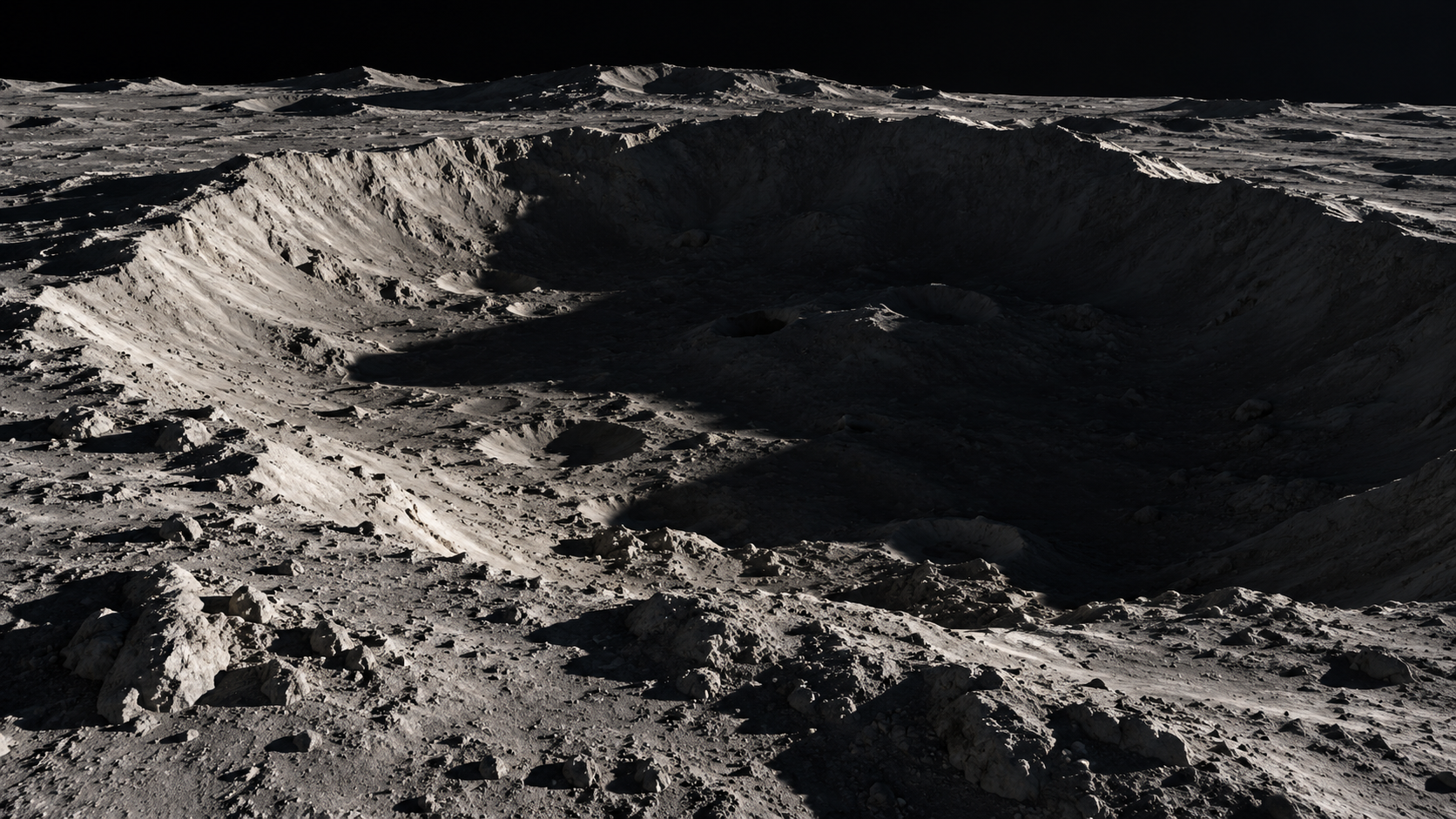
On October 9, 2009, NASA deliberately crashed a spent Centaur rocket stage and the LCROSS spacecraft into Cabeus crater near the Moon’s south pole. Managed by Ames Research Center in California, the Lunar Crater Observation and Sensing Satellite mission used the first impact to excavate material from a permanently shadowed crater floor. The trailing spacecraft observed the debris, gathered measurements, and transmitted them to Earth before striking the surface itself. The experiment was designed to investigate whether hydrogen detected near the lunar poles was associated with water ice. It turned a normally discarded rocket component into part of a scientific instrument.
Earlier orbital measurements had raised the possibility that water or other hydrogen-bearing substances accumulated in extremely cold polar regions. Some crater floors receive no direct sunlight because the Moon’s rotational axis has only a small tilt. These dark areas can preserve materials that would escape from warmer surfaces. Observing them from orbit, however, did not provide the same evidence as examining material directly. LCROSS offered a relatively economical way to sample the contents remotely: expose buried matter with an impact and study the resulting plume using cameras and instruments sensitive to several ranges of light.
LCROSS launched with the Lunar Reconnaissance Orbiter in June 2009 and remained attached to its Centaur stage through much of the journey. Before the final approach, the spacecraft separated so that the heavy stage would hit first. Centaur struck at about 11:31 Universal Time, followed several minutes later by the observing spacecraft. Earth-based telescopes, Hubble, and the lunar orbiter also monitored the event. The anticipated plume was not a spectacular visible explosion in the live images, and immediate impressions did not settle the scientific question. Researchers needed to analyze the recorded spectra and other measurements before interpreting the composition of the excavated material.
NASA announced evidence of water from the LCROSS observations in November 2009, a later result that should be distinguished from the October impacts. The findings strengthened the case that permanently shadowed lunar terrain contains valuable volatile materials and helped shape interest in future polar exploration. Obtaining and using such resources remains much more difficult than detecting them, requiring equipment that can operate in deep cold and darkness. The mission’s technological legacy includes its economical spacecraft design, coordinated observations, and use of controlled impact as a sampling method. October 9 marks the execution of that experiment: an engineered collision followed by a brief, carefully planned opportunity to collect evidence from an otherwise inaccessible environment.
Earlier missions detected hydrogen near the lunar poles, but its chemical form and distribution required further investigation. Permanently shadowed craters offered a likely place for volatile materials to survive.
LCROSS repurposed its Centaur upper stage as an impactor. The spacecraft followed behind so that it could examine material excavated from Cabeus crater.
The Centaur and observing spacecraft struck on October 9, 2009. Their instruments and supporting observatories recorded the event even though the visible plume was less dramatic than many viewers expected.
The impacts did not instantly establish the final scientific result. Researchers analyzed the measurements, and NASA announced evidence of water in November.
The mission demonstrated a controlled-impact method for investigating inaccessible terrain. Its design also made productive use of a rocket stage normally treated as spent hardware.
Lunar polar resources became a stronger focus for exploration planning. Detecting ice, however, does not by itself solve the engineering challenges of extracting and using it.
Explore more of "On This Day ..."
Discover more events from the same date across news, politics, technology, sports, and other fields. Each link highlights significant moments that shaped history on different fronts.