

On This Day in Tech: October 23, 2001
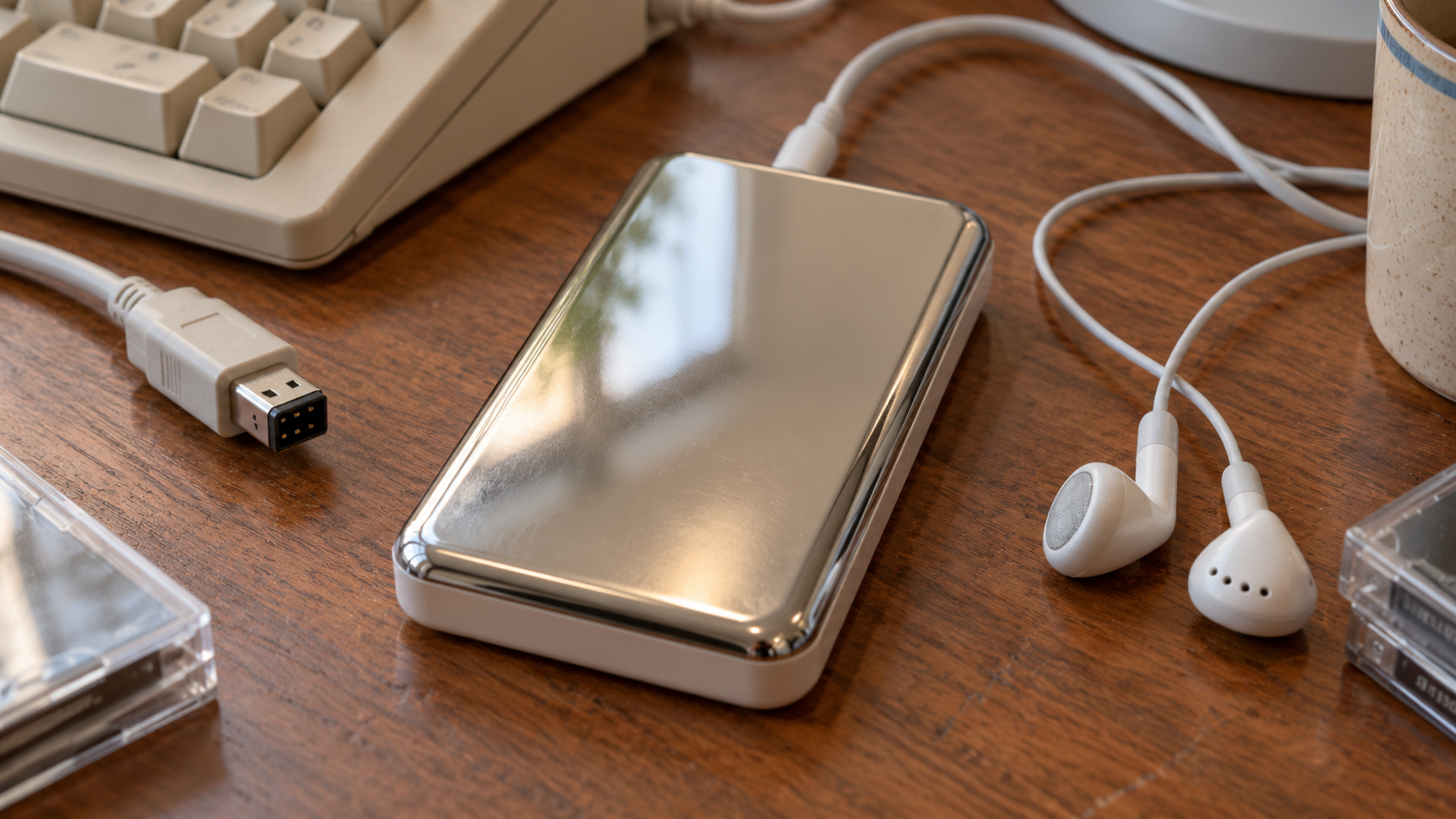
On October 23, 2001, Apple introduced the original iPod, a portable digital music player with a five-gigabyte hard drive. The announcement described a device intended to carry a substantial music collection while remaining small enough for a pocket. It worked with iTunes on a Macintosh and used a FireWire connection to transfer music and charge its battery. The introduction date should be distinguished from retail availability, which Apple scheduled for November 10. Other digital music players already existed, so the milestone was not the invention of the MP3 player. It was Apple’s particular combination of storage, controls, software, and transfer speed.
The original hardware had a small monochrome display, a physical rotating scroll wheel, and controls arranged for one-handed navigation. A large library created a problem that a simple sequence of next-track presses could not conveniently solve. Users needed to move quickly among artists, albums, playlists, and songs without carrying a desktop-sized interface. The wheel accelerated movement through long lists, while the display provided feedback about selection and playback. Behind those controls, a compact hard drive supplied the capacity. Battery operation and buffering helped make a mechanical storage device usable while the listener moved, though the player remained a physical object with practical limits.
The desktop connection was central to the design. Music and playlists were organized in iTunes, then synchronized to the player when it was connected. This divided the work between a computer suited to managing a library and a small device suited to listening away from the desk. FireWire reduced the time required to load many tracks and also supplied power through the cable. The initial model’s dependence on a compatible Mac limited its audience, and its price made it a considered purchase rather than a low-cost accessory. Later Windows compatibility, new models, and the iTunes Store belonged to subsequent stages of the product’s development.
The iPod became an influential example of a device whose appeal depended on the experience surrounding it as much as on any single component. Industrial design, menu navigation, synchronization, headphones, charging, and music management had to function together. Later smartphones combined music playback with communications and other applications, while streaming changed how many people obtained their listening libraries. Those developments do not alter what the October 2001 announcement introduced: a dedicated player integrated with desktop software and local storage. The date is remembered as the start of a product family that helped make portable digital music familiar, demonstrating the value of reducing friction across an entire everyday task rather than promoting specifications alone.
Portable digital music players existed before iPod. Apple's October 23, 2001 announcement introduced its own integrated player and software approach.
The first model had a five-gigabyte hard drive and a physical scroll wheel. Retail availability was scheduled for November 10, not announcement day.
iTunes managed the library on a Mac, and synchronization moved music and playlists to the player. FireWire provided fast transfers and charging.
Initial Mac dependence and price limited access. Later compatibility and online music sales should not be projected onto the first release.
The product family helped establish portable digital music as a familiar routine. Navigation and synchronization were important alongside storage capacity.
Smartphones and streaming later changed listening habits. The original iPod illustrates how coordinated hardware and software can simplify a complete task.
Explore more of "On This Day ..."
Discover more events from the same date across news, politics, technology, sports, and other fields. Each link highlights significant moments that shaped history on different fronts.