

On This Day in Tech: December 22, 1964
On December 22, 1964, test pilot Robert J. Gilliland took the Lockheed SR-71 into the air for its first flight from Air Force Plant 42 in Palmdale, California. Developed by Lockheed’s Skunk Works organization under Clarence “Kelly” Johnson, the aircraft was intended for strategic reconnaissance at exceptional speed and altitude. Its first flight was the beginning of proving that design in the air, not the start of routine operational service. The SR-71 entered Air Force service later, in 1966. The distinction matters because an aircraft capable of crossing great distances at more than three times the speed of sound required much more than one successful takeoff.
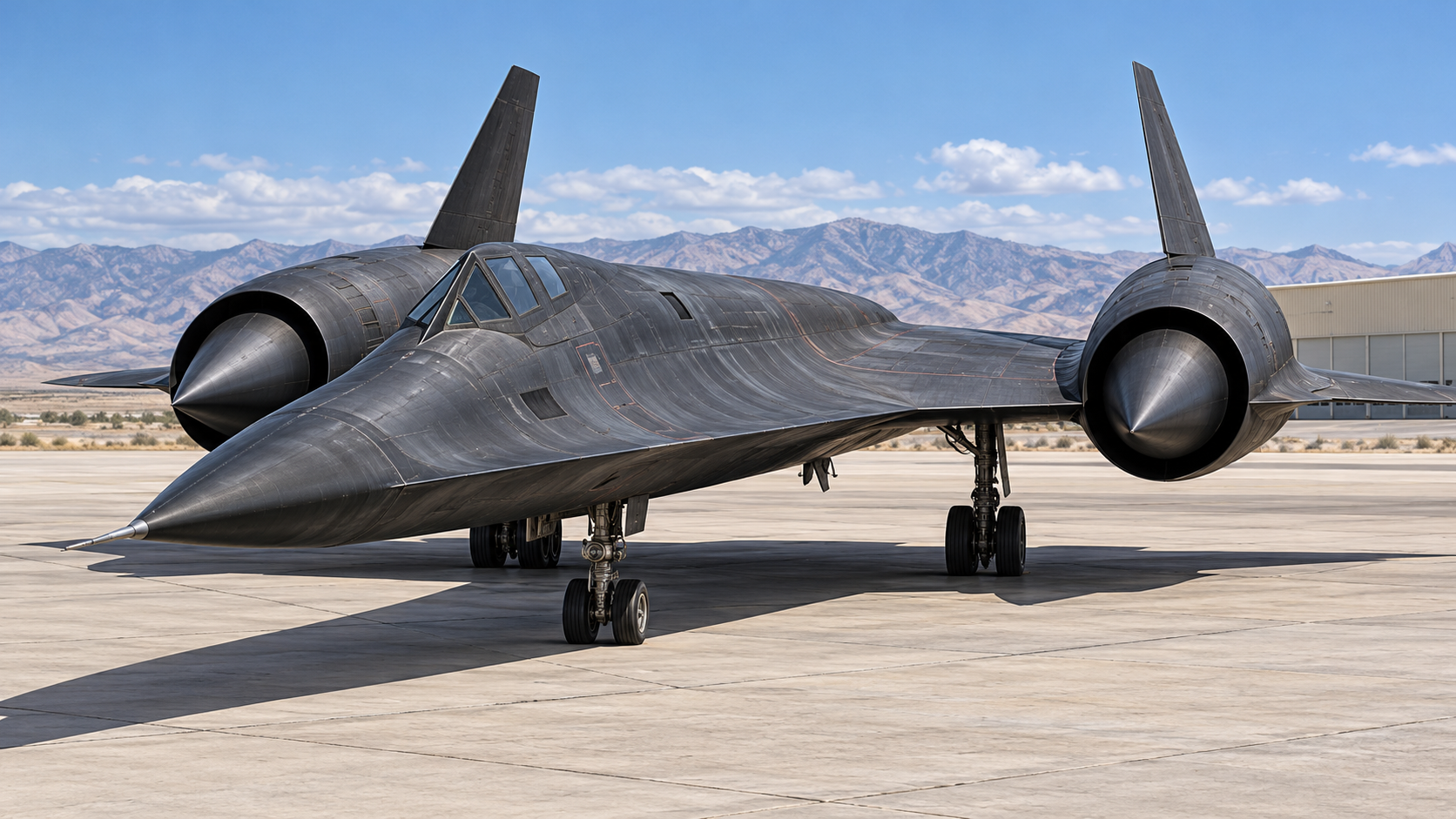
The Blackbird’s shape reflected the environment it had to withstand. A long, pointed fuselage blended into broad chines along the sides, while two large engine nacelles sat outboard of the central body. Prominent inlet cones helped control airflow entering the engines at high speed. The airframe used titanium extensively because sustained fast flight heated its surfaces far beyond the conditions faced by ordinary passenger aircraft. Materials, structure, fuel, and propulsion therefore had to be developed as connected systems. An aerodynamic outline alone could not solve the problems created by frictional heating, expansion, demanding operating temperatures, and long periods of high-speed cruise.
The SR-71 was part of a family that included the earlier A-12 reconnaissance aircraft and the YF-12 interceptor. Those related machines should not be assigned the SR-71’s first-flight date: the A-12 had already flown in 1962. The SR-71 incorporated a two-person crew and reconnaissance equipment appropriate to its Air Force role. Flight testing had to establish handling characteristics and verify the behavior of its engines, inlets, controls, and structure across an unusually demanding operating range. The first flight provided real measurements against which engineers could compare their calculations, identify problems, and plan additional tests before the aircraft could become a dependable operational tool.
The aircraft’s later career also reached beyond reconnaissance. During the 1990s, NASA used SR-71 aircraft as high-speed research platforms, studying subjects that included aerodynamics, propulsion, instrumentation, and thermal protection. That work illustrates why the December 1964 milestone belongs in engineering history as well as aviation history. The Blackbird was not simply a faster version of a conventional jet; its performance required many interdependent solutions to work together. Remembering the first flight highlights the transition from a design assembled on the ground to a machine whose real behavior could be measured in the sky, with extensive testing still ahead.
Gilliland flew the first SR-71 at Palmdale on December 22, 1964. Operational Air Force service followed in 1966.
The A-12 and YF-12 were related Blackbird designs. Their earlier flights are separate milestones, not alternative dates for the SR-71.
Titanium helped the aircraft withstand aerodynamic heating. Material selection was inseparable from the intended speed and flight duration.
Each engine inlet used a prominent conical spike. Managing airflow was essential to operating across the aircraft's speed range.
The SR-71 carried a two-person crew for its reconnaissance role. It was not a conventional fighter carrying missiles into combat.
NASA later used Blackbirds for high-speed research. A design created for reconnaissance also became a useful experimental platform.
Explore more of "On This Day ..."
Discover more events from the same date across news, politics, technology, sports, and other fields. Each link highlights significant moments that shaped history on different fronts.