

Basement Sump Pump Explainer
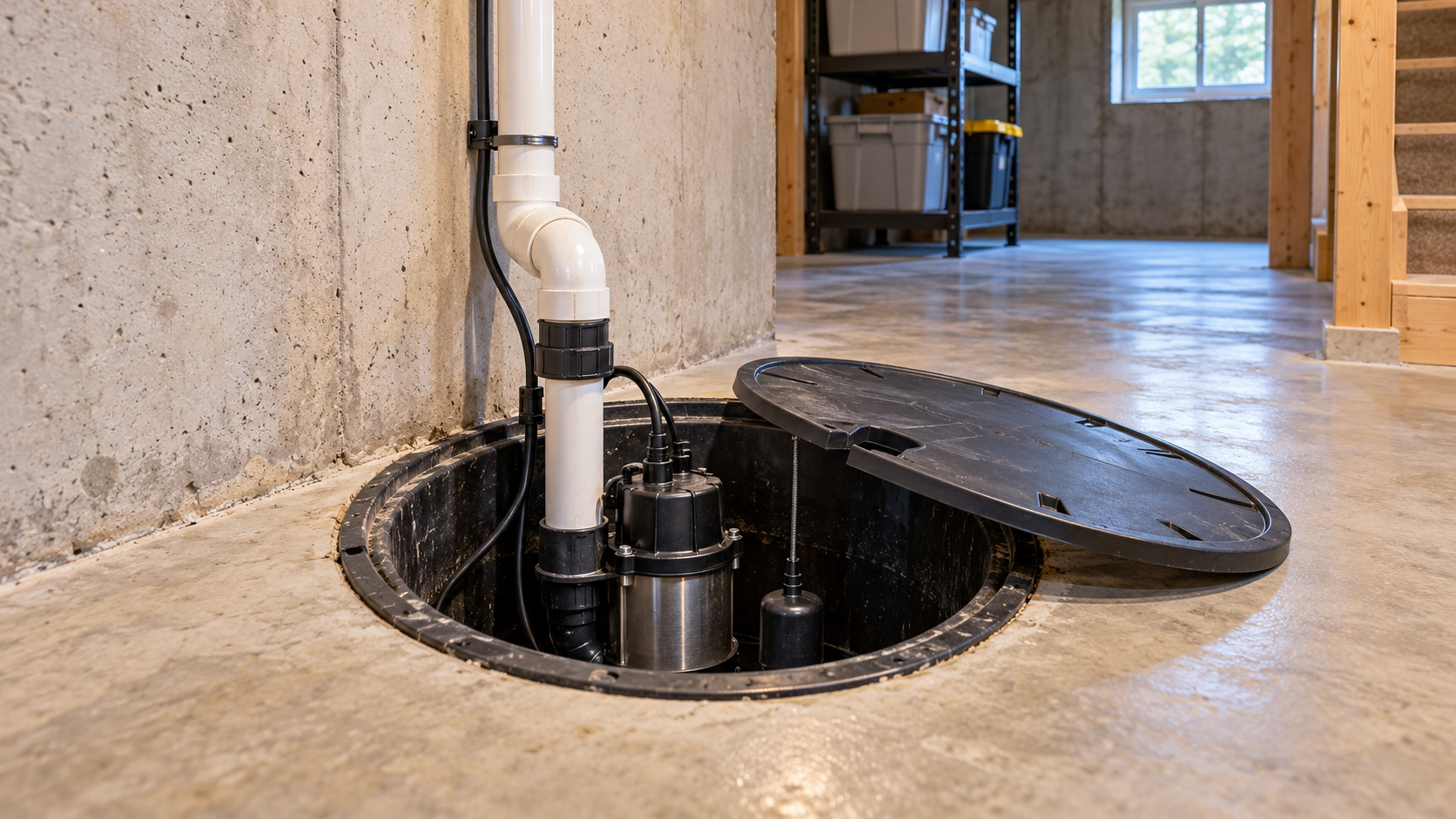
A sump pump manages water that reaches the foundation drainage system before it spreads across the basement floor. Perforated drain tile around or beneath the foundation guides groundwater into a pit called a sump basin, usually at the building’s lowest practical point. As water rises in the basin, a float switch or pressure sensor starts an electric pump. The pump’s impeller accelerates the water into a discharge pipe, which carries it upward and then outside to an approved location away from the foundation.
Most residential units are submersible pumps that sit in the basin, although pedestal designs place the motor above the water. Inside a centrifugal pump, the spinning impeller creates a low-pressure region near its center and throws water outward into a volute-shaped housing. The housing converts part of that velocity into pressure, providing enough head to lift water through the vertical pipe and overcome friction. Pump capacity therefore depends not only on gallons per hour but also on the total height and resistance of the discharge route.
A check valve in the discharge line allows flow outward but closes when the pump stops. Without it, the column of water in the pipe would drain back into the basin, forcing the pump to cycle again. A vent hole or manufacturer-specified anti-airlock feature may also be required. The switch needs clear movement, and the pump must stand level so it does not tip or trap the float. A secure lid reduces debris, moisture, and soil gases while leaving service access available.
Water should discharge where it can drain away without returning to the foundation, icing a walkway, eroding soil, or burdening a sanitary sewer. Local rules govern connections, and many places prohibit sump water in sanitary drains because storms can overwhelm wastewater treatment. The exterior pipe needs protection from freezing and blockage. Gutters, downspouts, grading, and exterior drainage remain the first defense; a pump is a mechanical backup for collected groundwater, not a substitute for directing surface water away from the house.
Because storms can interrupt electricity at the same moment water inflow increases, backup planning matters. Options include a battery-powered secondary pump, an approved water-powered unit where suitable, a generator connection, and high-water alarms. Every design has limits in runtime, capacity, maintenance, and local code. Testing should use clean water and the manufacturer’s procedure, not a hand forced into a live basin. The pump, switch, check valve, outlet, and backup source all need periodic inspection.
Frequent cycling may indicate high groundwater, a failed check valve, a small basin, or a discharge that returns water too near the house. Continuous running can signal a stuck switch, undersized pump, obstructed line, or inflow beyond capacity. Grinding sounds, overheating, odors, or a tripped circuit require attention. A sump pump keeps a basement dry only while the entire path works: drainage must reach the basin, the switch must start the pump, power must be available, and the discharge must remain open.
Foundation drains collect water in a sump basin. A switch starts a centrifugal pump, and a check valve prevents discharged water from falling back. Key terms include drain tile, basin, float switch, impeller, head, check valve, discharge line, and backup pump.
The valve closes when pumping stops so the water held in the vertical pipe cannot drain back into the pit and trigger another unnecessary cycle.
No. It manages water that reaches its collection system. Roof runoff, wall cracks, failed grading, plumbing leaks, and capacity problems need their own corrections.
Explore more "Explainers"
Discover additional explainers across politics, science, business, technology, and other fields. Each explainer breaks down a complex idea into clear, everyday language—helping you better understand how major concepts, systems, and debates shape the world around us.