

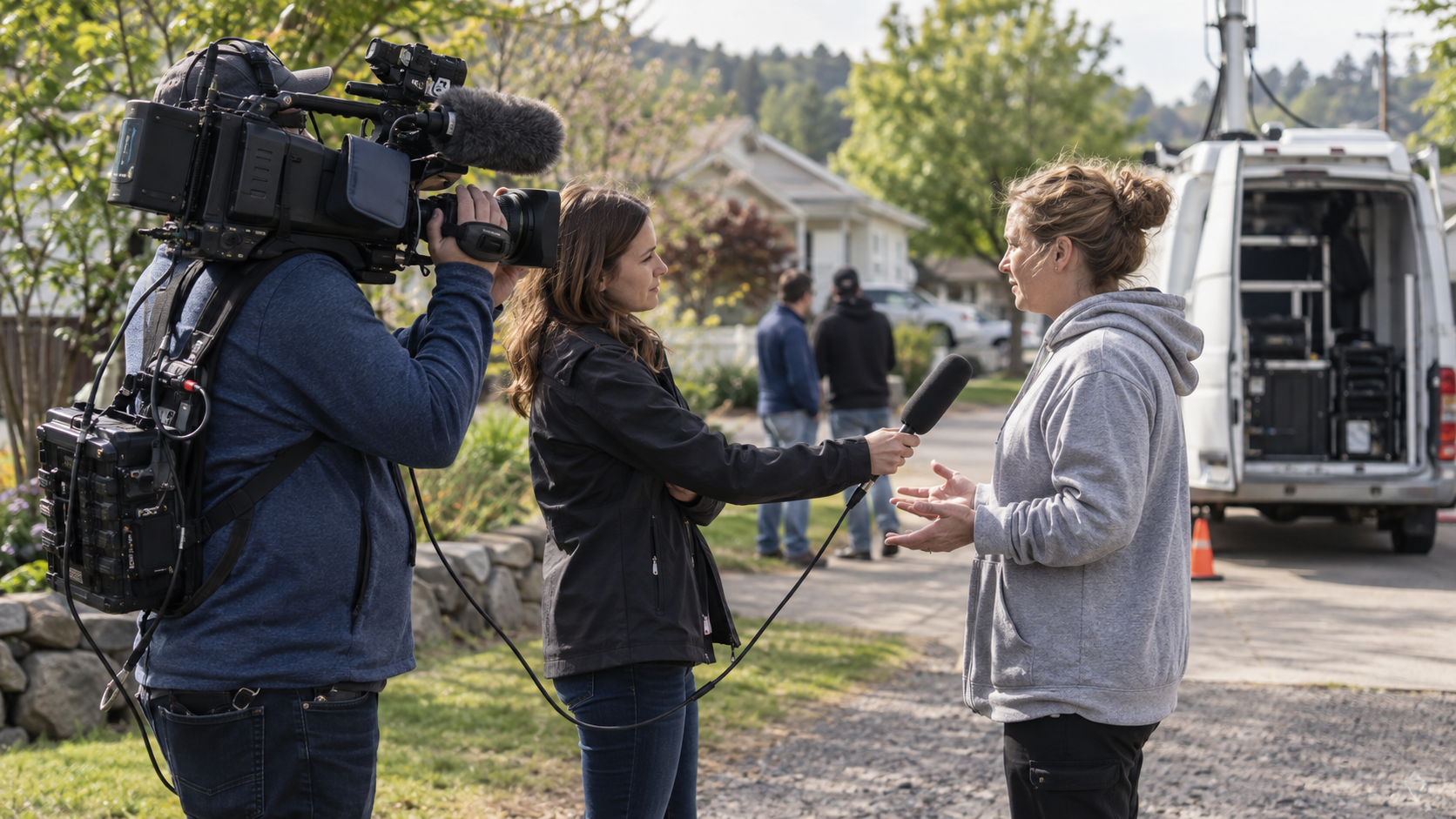
Electronic News Gathering Explainer
Electronic news gathering, commonly shortened to ENG, is the use of portable electronic equipment to collect and transmit news from the field. A crew may use a broadcast camera, microphones, lights, editing gear, and a vehicle or compact transmitter. The term became important when electronic video replaced film for much daily reporting, allowing stations to review, edit, and deliver pictures more quickly.
Modern ENG covers many workflows. Video can return by microwave, fiber, satellite, cellular bonding, or a secure internet connection. Some crews include a reporter, photographer, and field producer; others rely on one multimedia journalist. The equipment changes with the assignment, but the basic job remains: capture accurate pictures and sound, protect the recordings, and move usable material to the newsroom on deadline.
Planning begins before the crew leaves. Editors confirm the location, access, safety risks, expected interviews, transmission options, and backup routes. In the field, the photographer records establishing shots, details, sequences, and natural sound while the reporter verifies facts and gathers interviews. File names, time codes, and notes help editors connect each clip to its source and context.
Speed creates risks. A strong signal does not prove that a picture is current or authentic, and a dramatic live image can lack essential context. Crews confirm where and when material was recorded, identify supplied or user-generated footage, and avoid broadcasting private or dangerous details. They also protect cards, batteries, cables, and duplicate recordings because a technical failure can erase work that cannot be recreated.
ENG made television news more immediate, but it is not defined by one kind of truck or antenna. Today it includes compact cameras and networked transmitters alongside traditional microwave and satellite systems. The value comes from combining mobility with newsroom standards: verified reporting, clear audio and pictures, secure handling of material, and reliable communication between the field crew and the editors who put the story on air.
Electronic news gathering, the field collection and delivery of television news using electronic equipment.
No. Modern crews may use portable cellular, fiber, satellite, or internet-based transmission systems.
ENG is built for location reporting, where crews must handle changing conditions, access, safety, and remote transmission.
Explore more "Explainers"
Discover additional explainers across politics, science, business, technology, and other fields. Each explainer breaks down a complex idea into clear, everyday language—helping you better understand how major concepts, systems, and debates shape the world around us.