

Film Previsualization Explainer
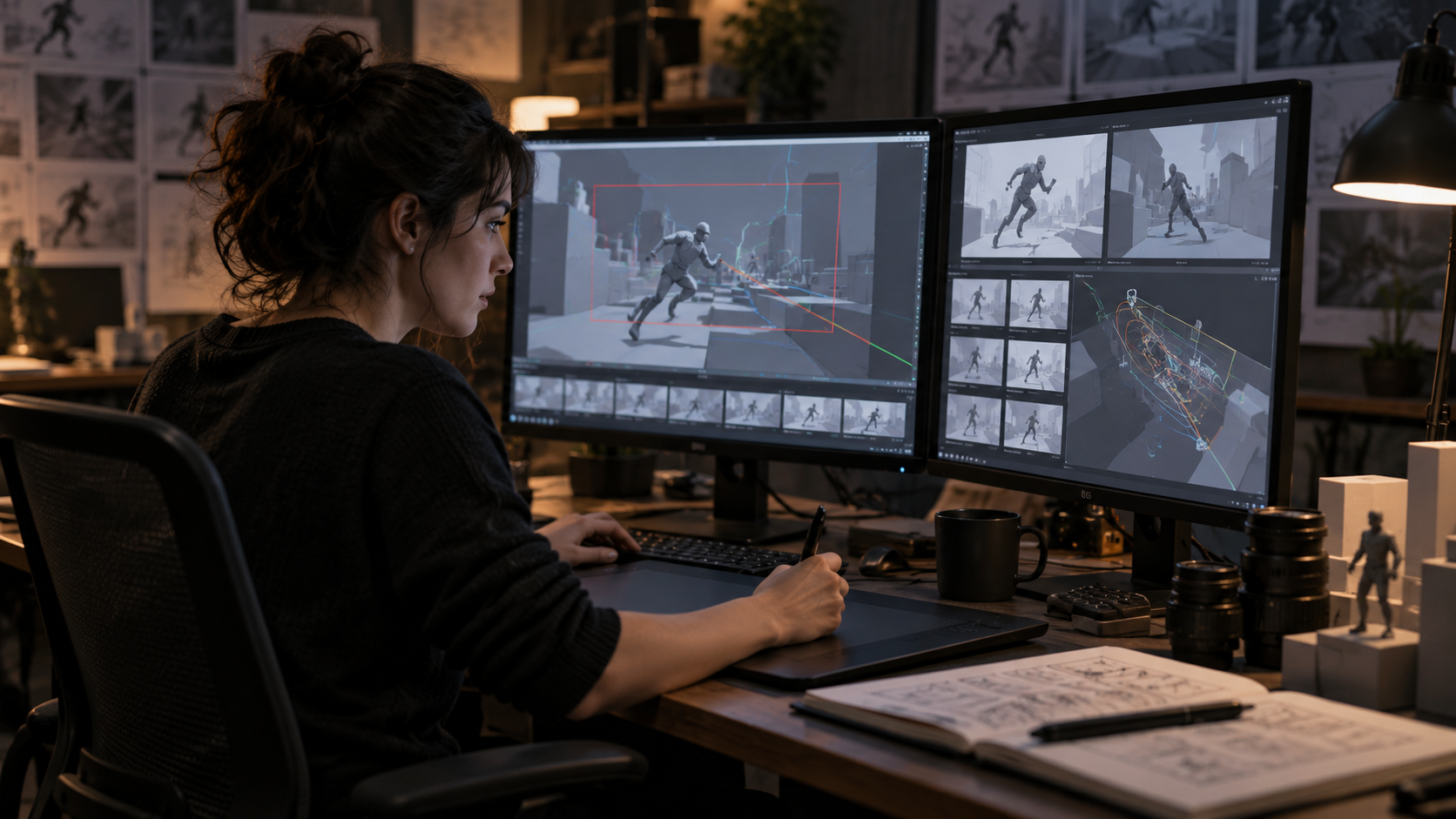
Film previsualization, often shortened to previs, creates a rough version of a planned sequence before principal photography or final animation. It can range from hand-drawn storyboards edited into an animatic to a navigable 3D scene with virtual cameras, temporary characters, approximate lighting, and sound. The images are intentionally unfinished. Their value lies in making time, space, camera position, movement, and effects requirements visible early enough for the team to discuss and change them cheaply.
A previs artist works from the script, designs, location information, and conversations with the director, cinematographer, production designer, stunt team, visual-effects supervisor, and other departments. The team builds simplified environments and blocks action, then tests lenses, angles, shot order, pacing, and transitions. Technical previs may add more precise measurements, camera paths, set dimensions, or equipment constraints so the planned shot can be translated into a real stage, location, motion-control move, or effects setup.
Complex action and visual-effects scenes benefit because many departments must prepare interdependent work. Previs can indicate where performers look, what portion of a digital creature is represented by a practical marker, how a stunt connects to an effects extension, or when a camera must clear a set wall. Producers can use the sequence to estimate resources and identify expensive assumptions, while editors can test whether the intended coverage supports a readable scene.
Previs is a communication model, not a binding miniature of the finished film. Rough animation can make performances feel stiff, hide the expressive value of a real location, or encourage teams to protect an approved plan after better ideas emerge on set. Physical reality may also change the shot through weather, safety, actor movement, available light, lens behavior, or schedule. Useful previs shows intent and dependencies while leaving room for discovery. When viewing a previs comparison, ask what problem the early version was designed to solve. A close visual match may demonstrate planning, but a changed shot is not evidence of failure. The production may have found a clearer, safer, cheaper, or more emotional solution. Good previsualization reduces uncertainty where coordination matters most. It gives collaborators a shared moving reference and lets them spend production time refining the scene instead of first discovering its basic geometry. A practical way to read or discuss Film Previsualization is to begin with the basic definition and then identify the choices made in a particular example. Previsualization makes a rough moving version of a sequence so timing, geography, camera ideas, and effects needs can be tested early. Next, ask who sets the relevant rules, who performs the work, and which results follow from creative judgment, law, contracts, technology, budget, or production limits. Similar-looking examples can operate differently because their audience, market, format, timing, and agreements are different. Previs can expose costly assumptions, missing coverage, unsafe moves, and conflicting department needs before the shooting day. It also helps to distinguish a formal industry category from an informal critical label or one organization's current practice. That separation keeps a memorable anecdote from becoming a false universal rule. Dates and territories matter: tools, distribution systems, audience behavior, and standard agreements change, while older examples can preserve assumptions that no longer apply everywhere. When a claim sounds absolute, compare it with a second kind of source and look for the conditions under which the claim is true. Then trace the process from the visible result back through the less visible decisions, handoffs, and quality checks that produced it. A successful previs solves coordination problems even when the final shot changes in response to creative or physical reality. Finally, compare the example with a contrasting case and note which part of the definition still holds. This method keeps the explanation grounded, highlights the people and systems behind the outcome, and leaves room for reasonable disagreement about hybrid or borderline cases.
Previsualization makes a rough moving version of a sequence so timing, geography, camera ideas, and effects needs can be tested early.
Formats range from edited storyboards to simple 3D animation and detailed technical plans with measured camera paths.
Directors, cinematographers, designers, stunt teams, editors, and visual-effects crews use previs as a shared planning language.
Previs can expose costly assumptions, missing coverage, unsafe moves, and conflicting department needs before the shooting day.
Its simplified images may undersell performance or location possibilities, so the plan should not prevent useful discovery on set.
A successful previs solves coordination problems even when the final shot changes in response to creative or physical reality.
Explore more "Explainers"
Discover additional explainers across politics, science, business, technology, and other fields. Each explainer breaks down a complex idea into clear, everyday language—helping you better understand how major concepts, systems, and debates shape the world around us.