

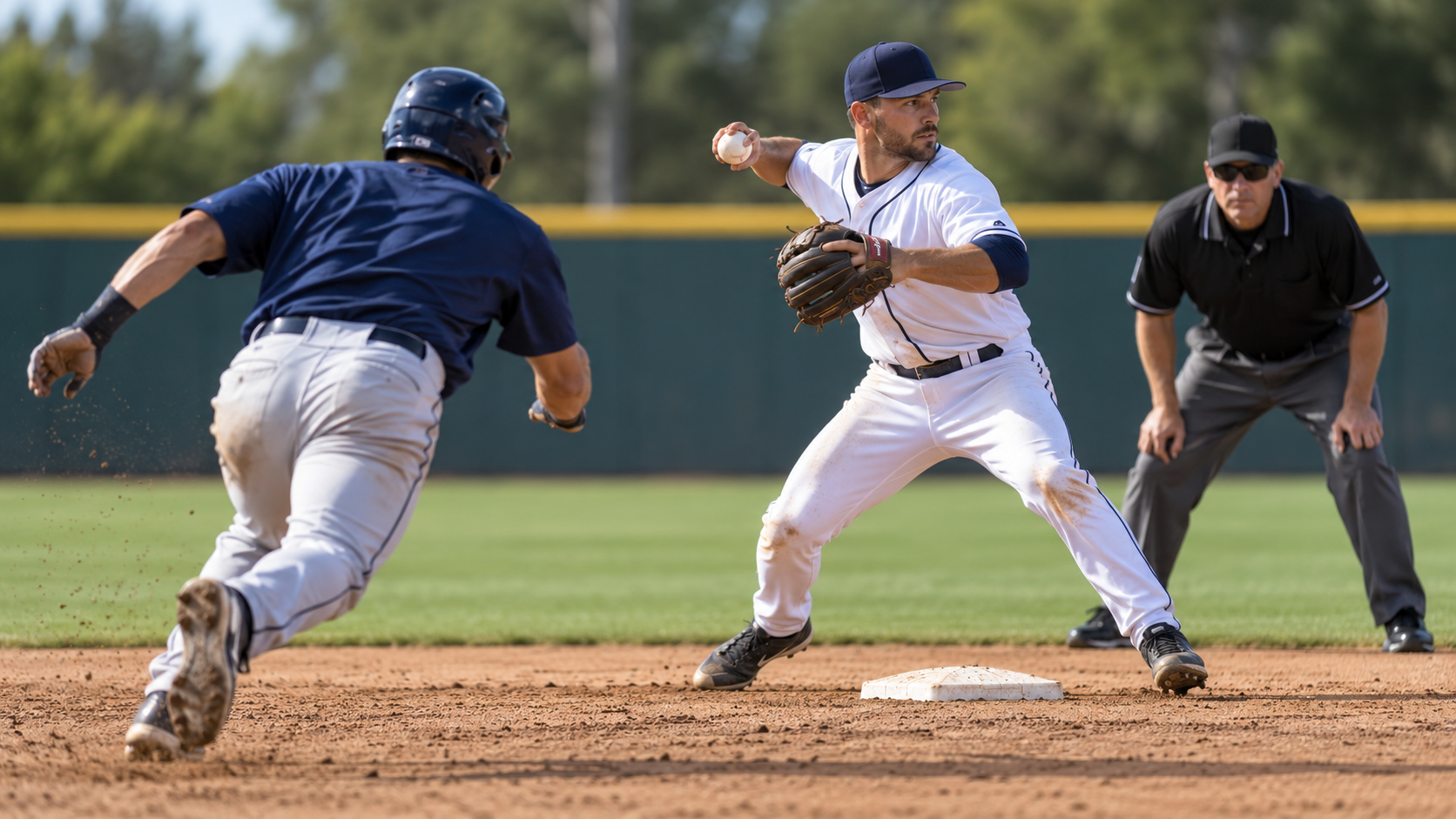
How Retired-Runner Interference Works in Baseball Explainer
A baseball runner who has been put out does not gain permission to disrupt the rest of the play. If that retired runner hinders or impedes a fielder making a following play on another runner, the offensive team can be charged with interference and an additional out.
The umpire calls out the teammate against whom the defense was making the play. The ball becomes dead, and other runners return or are placed under the applicable interference rule. This prevents an already-retired player from trading personal consequence for a benefit to a teammate.
Continuing a normal slide, advancing briefly, or trying to return to the last legally touched base is not by itself interference. There must be conduct that actually confuses, hinders, or impedes the defense, and intent may be especially important in slide and double-play situations.
Officials follow the fielder's opportunity, the retired runner's route and actions, and the target of the next play. Contact is not always required, while unavoidable proximity is not automatically illegal. The rule protects the defense's continuing chance after the first out without banning every movement by the retired runner.
Yes. Interfering with a following play can cause the targeted teammate to be declared out.
No. Ordinary continued movement alone is not enough without hindering or confusing the defense.
No. Conduct can impede a play even without contact, depending on the umpire's judgment.
Explore more "Explainers"
Discover additional explainers across politics, science, business, technology, and other fields. Each explainer breaks down a complex idea into clear, everyday language—helping you better understand how major concepts, systems, and debates shape the world around us.