

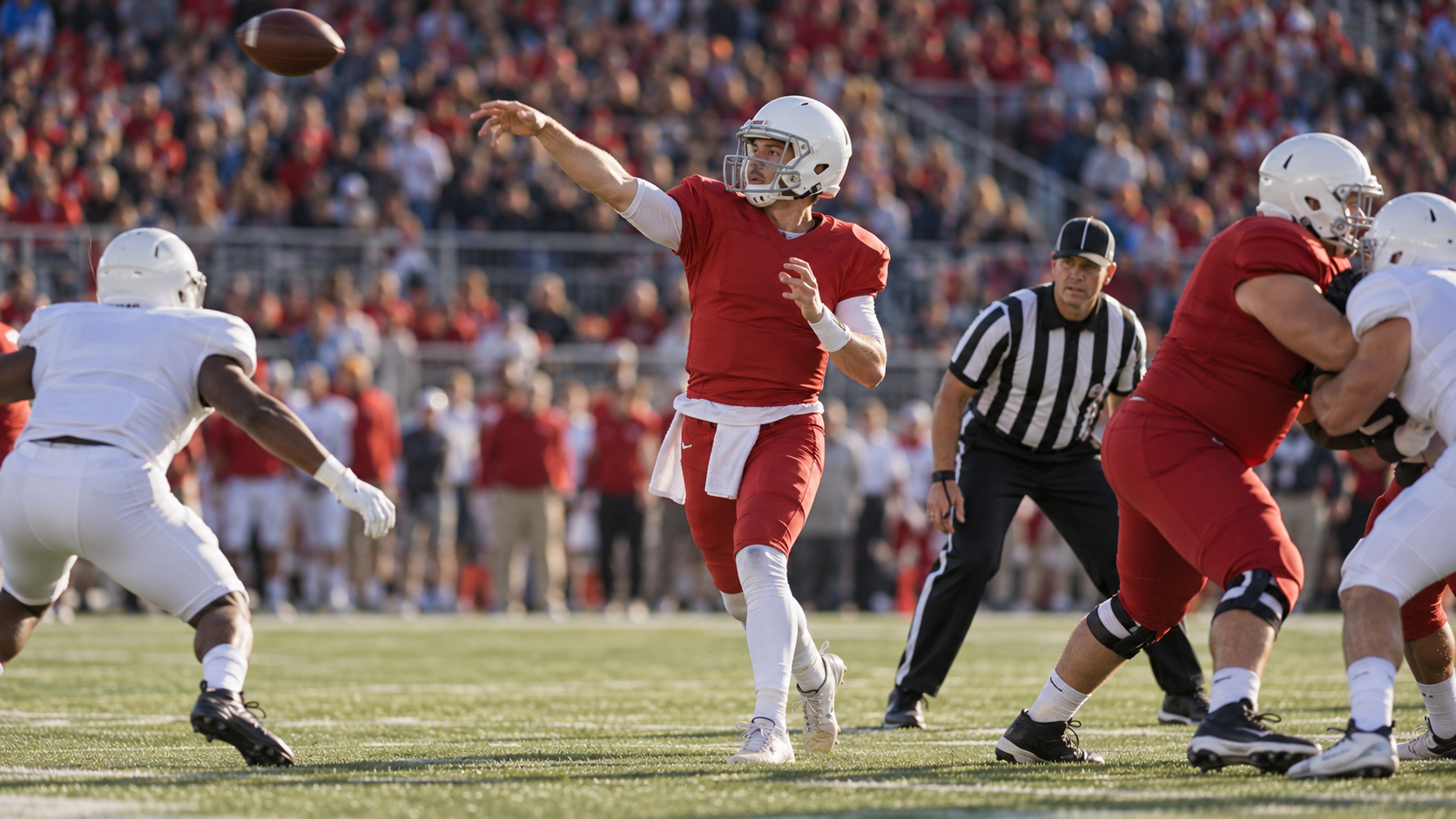
How Illegal Forward Passes Work in the NFL Explainer
An NFL offense may throw one legal forward pass during a down, and the pass must be released from behind the line of scrimmage. Any second forward pass, a pass after the ball has crossed the line and returned, or a pass released wholly beyond the line is illegal.
For a beyond-the-line ruling, the passer's entire body and the ball must be beyond the line when the ball leaves the hand. If any part of the passer remains on or behind the line, the release can still qualify as behind it. Replay may review that objective location.
The penalty is five yards from the appropriate spot and loss of down. A forward pass thrown after a change of possession is also illegal because the original offensive team's one-pass privilege does not transfer to the defense after an interception or fumble recovery.
This rule differs from intentional grounding, which concerns a legal passer behind the line deliberately avoiding a loss without a realistic target or exception. Officials identify the line, the ball's earlier path, possession changes, and release point before choosing the correct foul and enforcement.
The passer's entire body and the ball must be beyond the line at release.
No. Only one forward pass is permitted during a down.
Five yards from the applicable spot and loss of down.
Explore more "Explainers"
Discover additional explainers across politics, science, business, technology, and other fields. Each explainer breaks down a complex idea into clear, everyday language—helping you better understand how major concepts, systems, and debates shape the world around us.