

How Seven-Metre Throws Work in Handball Explainer
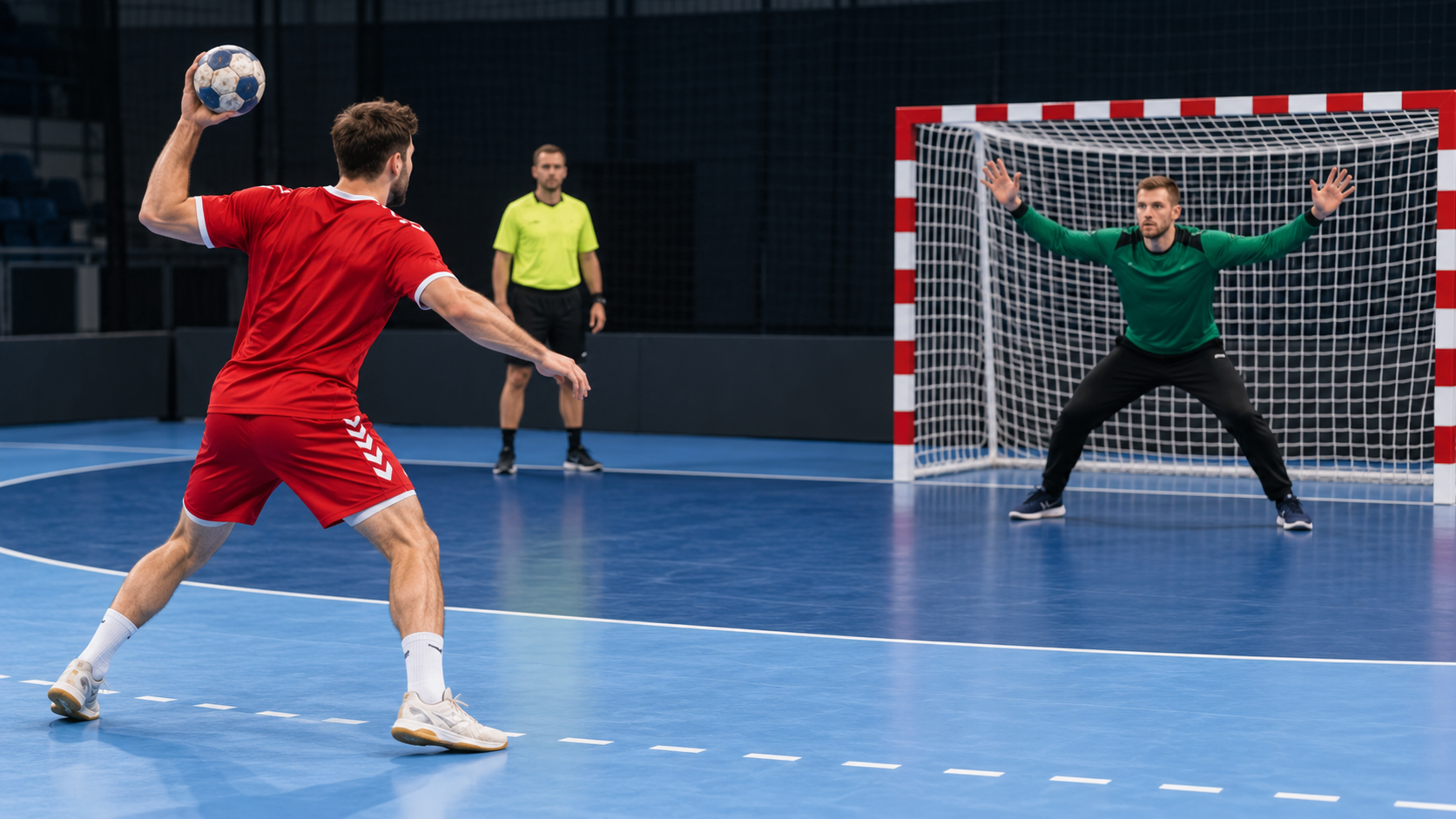
A seven-metre throw is handball's clearest scoring remedy when the defending team illegally destroys a clear chance, when an unauthorized whistle prevents one, or in other situations specified by the rules. It resembles a penalty shot but remains part of normal game administration.
The shooter stands behind the seven-metre line and must keep one foot in contact with the floor until the ball leaves the hand. Teammates stay outside the free-throw line, defenders remain at least three metres away, and the goalkeeper cannot cross the four-metre restraining line too early.
After the referee's whistle, the throw must be taken within the required three seconds. The shooter may use a direct throw, feint, or jump consistent with the foot requirement, but cannot touch the ball again until it has touched the goalkeeper, goal, or another player.
A goal counts normally if the ball enters. If the goalkeeper saves or the ball rebounds into play, action continues unless another violation occurred. Officials may order a retake or apply progressive punishment when premature movement materially affects the attempt. The procedure isolates a fair chance without guaranteeing a goal.
Most often because the defense illegally destroyed a clear chance to score.
The goalkeeper may move forward but cannot cross the four-metre restraining line too early.
The throw must be taken within three seconds after the referee's whistle.
Explore more "Explainers"
Discover additional explainers across politics, science, business, technology, and other fields. Each explainer breaks down a complex idea into clear, everyday language—helping you better understand how major concepts, systems, and debates shape the world around us.