

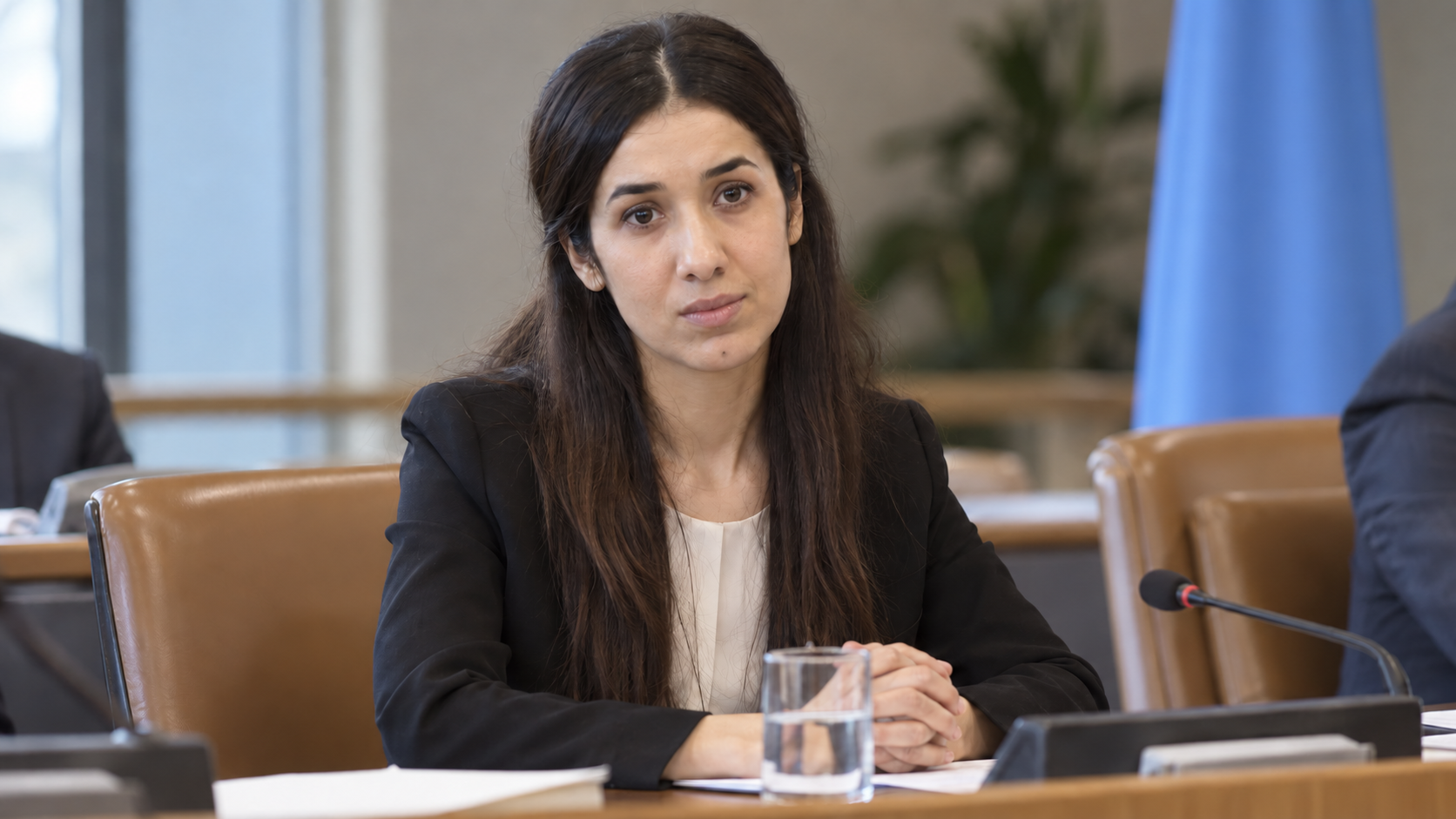
“I do not seek more sympathy; I want to translate those feelings into actions on the ground.”
Nadia Murad made this appeal in her Nobel lecture on December 10, 2018. The Yazidi survivor and human rights advocate shared the Peace Prize with Denis Mukwege for their efforts against sexual violence in conflict. In the lecture, Murad spoke about the destruction of her community and the distance between public concern and meaningful help. Her sentence draws attention to that distance. Sympathy can acknowledge another person’s suffering, but its political value depends on what follows: protection, practical support, and sustained work to secure accountability.
The quotation gives an unusually clear test for compassionate language. A statement of concern should make some difference to the people it describes. That does not mean every listener has the same resources or responsibilities. A government can provide services, support investigations, or offer safe refuge. An institution can change its procedures so that survivors receive dignified assistance. A citizen can learn about an organization’s work and support it responsibly. The common requirement is a connection between feeling and action. When expressions of concern become a substitute for that connection, they risk leaving people in essentially the same circumstances as before.
Murad’s language also protects the agency of those seeking help. The person at the center of the quotation is asking for a response with a purpose, rather than an audience for a moving story. That distinction matters in public debates about displacement and violence. Survivors should be able to influence priorities, decide how their experiences are represented, and participate in the decisions that shape their futures. An effective response listens to their needs without demanding repeated testimony as the price of support. It also recognizes that rebuilding a life requires more than emergency relief. Safety, education, livelihoods, community ties, and accessible institutions can each determine whether recovery is possible.
The lasting political lesson is about follow-through. Public attention often moves quickly, while the work of protection and accountability takes years. A responsible institution should therefore make commitments specific enough to track and durable enough to survive a change in headlines. Citizens can ask who is responsible, what resources have been provided, and whether the people affected can assess the result. Those questions turn compassion into an obligation that can be examined. Murad’s statement remains powerful because it makes that obligation plain. Recognition has value, but the measure of a response is the improvement it brings to people’s freedom, safety, and ability to shape their own lives.
Murad delivered the quotation in her 2018 Nobel lecture while speaking about the Yazidi community and the need for practical assistance.
The lecture joined survivor testimony with demands for protection and accountability.
Her words ask listeners to connect concern with concrete measures rather than letting sympathy become an endpoint.
Respectful assistance should also preserve survivors’ agency and allow them to help define what effective support means.
The principle applies to humanitarian commitments, public services, and the long work of rebuilding after displacement.
Clear responsibilities and visible follow-through let affected communities evaluate whether promises have produced meaningful change.
Explore more "Quotes of The Day"
Discover more notable quotes from influential voices across politics, science, business, technology, sports, and culture. Each quote offers insight into how ideas, beliefs, and decisions shape the world around us.