

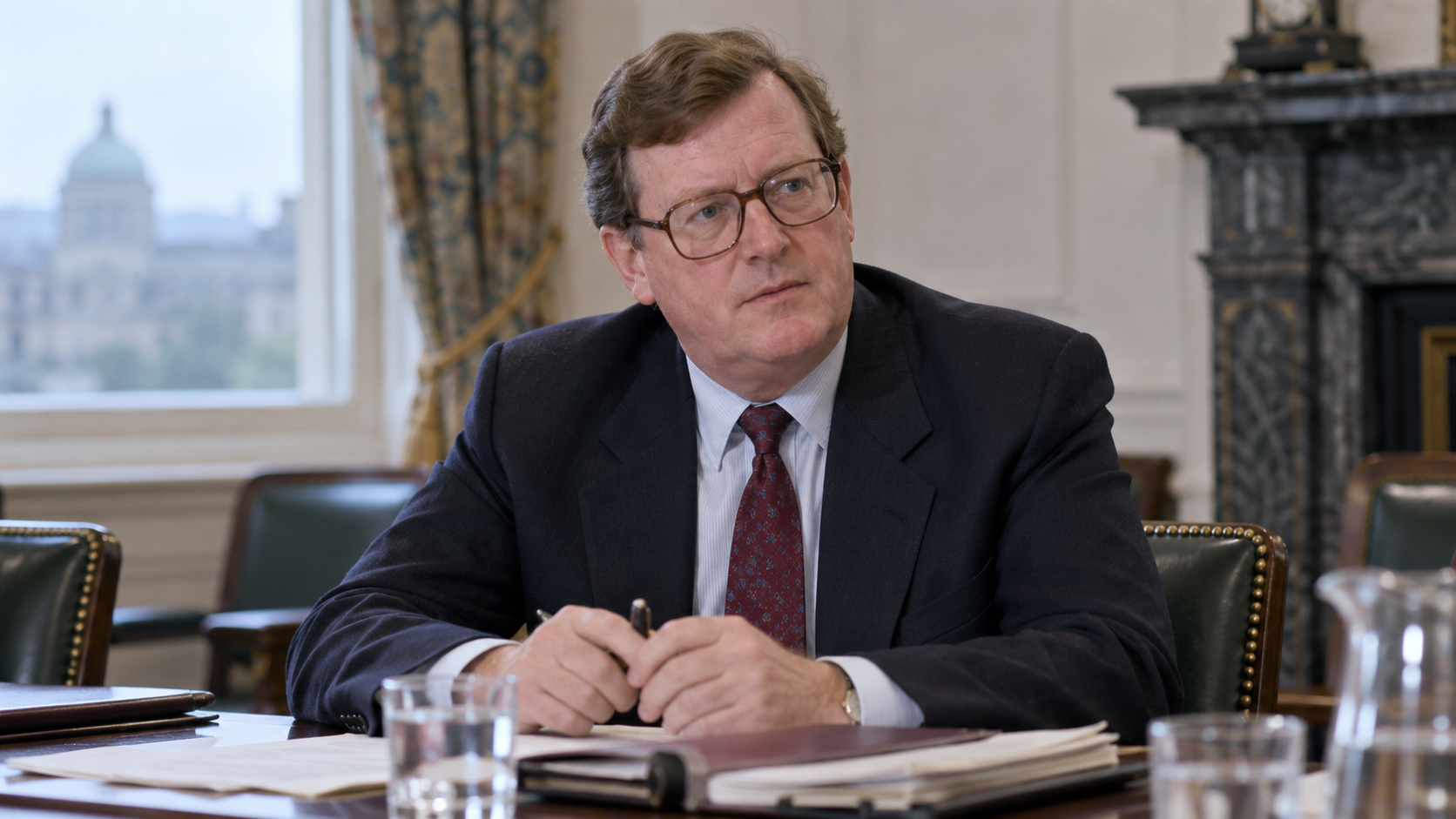
“We have a peace of sorts in Northern Ireland. But it is still something of an armed peace.”
David Trimble used these words in his Nobel lecture on December 10, 1998, following the Good Friday Agreement. He shared that year’s Peace Prize with John Hume for efforts toward a peaceful settlement in Northern Ireland. The quotation captures a difficult stage in the life of an agreement: a political breakthrough can be real while insecurity remains real as well. Trimble’s phrase acknowledges progress without pretending that a document instantly dissolves the habits, fears, and armed divisions that developed over many years of conflict.
An agreement changes the framework within which people make decisions. It can establish institutions, recognize competing identities, and give communities a route to pursue their interests through democratic politics. But everyday trust develops through experience. A family needs to see that traveling across a neighborhood is safe. A political party needs confidence that rivals will honor procedures after losing a vote. Public officials need to enforce rules consistently enough that residents believe those rules belong to everyone. These practical experiences give an agreement substance. Without them, the formal promise of peace can feel distant from the circumstances in which people actually live.
The term armed peace also raises the problem of credibility. If groups retain the means or expectation of returning to violence, every political dispute can acquire an additional threat. Participants may negotiate while wondering whether opponents will ultimately accept an unfavorable outcome. Changing that expectation requires patience, verification, and reliable institutions. It also requires leaders to explain compromise to their own supporters. A settlement can become fragile when one side presents necessary concessions as humiliation or when another assumes that the signatures settle every unresolved issue. Effective leadership makes room for disagreement while defending the shared procedures that keep disagreement from becoming destructive.
Trimble’s wording offers a useful standard for reading political announcements about the end of a conflict. The first question is what has changed; the next is what still needs to happen. Are institutions functioning? Are people able to participate safely? Are commitments being carried out in ways that both sides can examine? Those questions help citizens distinguish a meaningful beginning from a completed outcome. They also recognize the achievement involved in moving a conflict into a political framework at all. The quotation’s value lies in its measured honesty. Peace can advance through imperfect stages, provided those stages lead toward greater public safety, democratic participation, and confidence in a common future. Building that confidence is a public responsibility that extends well beyond the negotiating table.
Trimble spoke during the first year of the Good Friday Agreement, a settlement intended to move Northern Ireland toward democratic cooperation.
He shared the 1998 Peace Prize with John Hume; their different political traditions were central to the significance of that recognition.
An agreement can establish a peaceful framework before communities experience the full benefits of safety and trust.
The quotation highlights the gap between a political settlement and the work required to carry it into daily life.
Peace processes need durable institutions, verified commitments, and leaders willing to defend compromise among their own supporters.
The statement encourages realistic evaluation of progress without dismissing the importance of an initial breakthrough.
Explore more "Quotes of The Day"
Discover more notable quotes from influential voices across politics, science, business, technology, sports, and culture. Each quote offers insight into how ideas, beliefs, and decisions shape the world around us.