

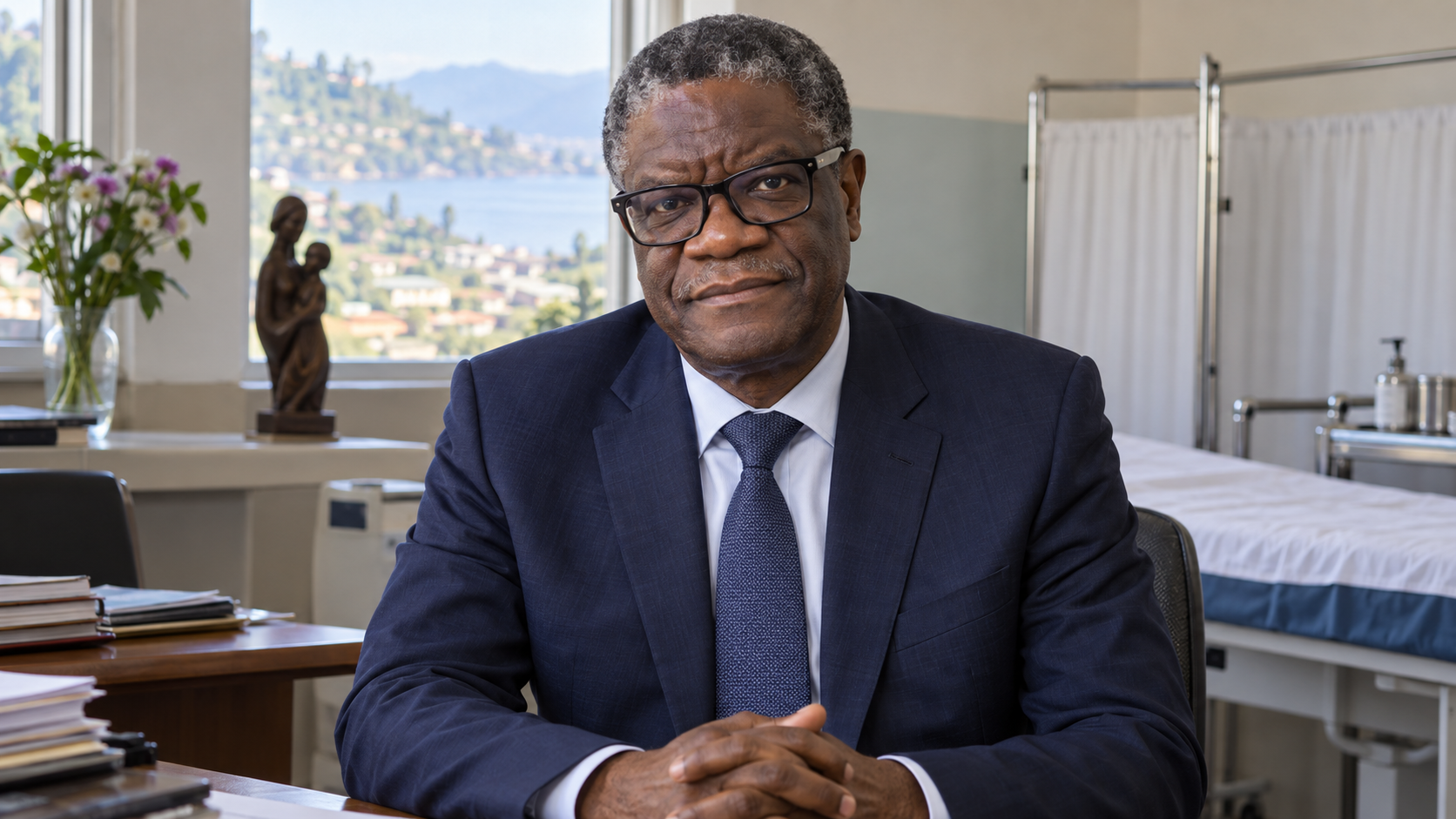
“There is no lasting peace without justice.”
Denis Mukwege delivered this statement in his Nobel lecture on December 10, 2018. The Congolese physician shared the Peace Prize with Nadia Murad for their work against sexual violence in armed conflict. His lecture connected the treatment of survivors with the political conditions that allow violence to continue. The quotation condenses that connection into a direct claim: ending immediate hostilities is insufficient if people remain exposed to abuse and those responsible face no meaningful accountability. Lasting peace must give people a reason to believe that their rights can be protected.
Justice serves several purposes in that argument. It can establish what happened, recognize the people harmed, and make clear that public authority has limits. It can also change expectations about future conduct. A person who believes that serious abuses will be investigated may act differently from someone who expects permanent protection from scrutiny. For communities emerging from violence, the reliability of that process matters as much as the language used to announce it. Evidence must be handled carefully, witnesses need protection, and proceedings should respect fair procedures. The legitimacy of a response depends on applying standards consistently rather than choosing convenient targets.
The quotation also directs attention to survivors’ lives after the immediate crisis. A legal judgment may be important while leaving substantial needs unmet. People can require medical care, emotional support, opportunities to work, and assistance in rebuilding relationships or returning to a community. Public institutions should recognize those needs as part of restoring dignity. They should also avoid treating survivors as passive symbols of a national story. Listening to people’s priorities can reveal barriers that officials would otherwise miss. A system becomes more credible when the people it is meant to serve can access it without being placed at further risk or forced to surrender their agency.
For modern politics, Mukwege’s statement provides a way to evaluate promises of stability. A quiet period is welcome, but citizens should ask whether the underlying protections are becoming stronger. Can an ordinary person report an abuse? Can an independent institution investigate? Do public officials face the same standards as everyone else? Do those harmed receive meaningful support? These questions make peace something that can be assessed through daily conditions. They also show why accountability and recovery require sustained resources. The quotation’s enduring force lies in its insistence that public safety and human dignity belong together. A peace that protects only the powerful leaves everyone else waiting for the next failure.
Mukwege’s 2018 Nobel lecture linked his clinical work in the Democratic Republic of Congo with a wider demand for accountability.
He shared the award with Nadia Murad, another leading advocate for survivors of sexual violence in conflict.
The statement treats justice as a condition that helps peace endure, rather than a separate matter to address later.
Credible investigations, fair procedures, and survivor support each help restore confidence in public institutions.
Readers can apply this standard to promises of stability by examining who is protected and who can obtain a remedy.
Accountability should be consistent, and recovery should include the practical conditions needed to rebuild a dignified life.
Explore more "Quotes of The Day"
Discover more notable quotes from influential voices across politics, science, business, technology, sports, and culture. Each quote offers insight into how ideas, beliefs, and decisions shape the world around us.