

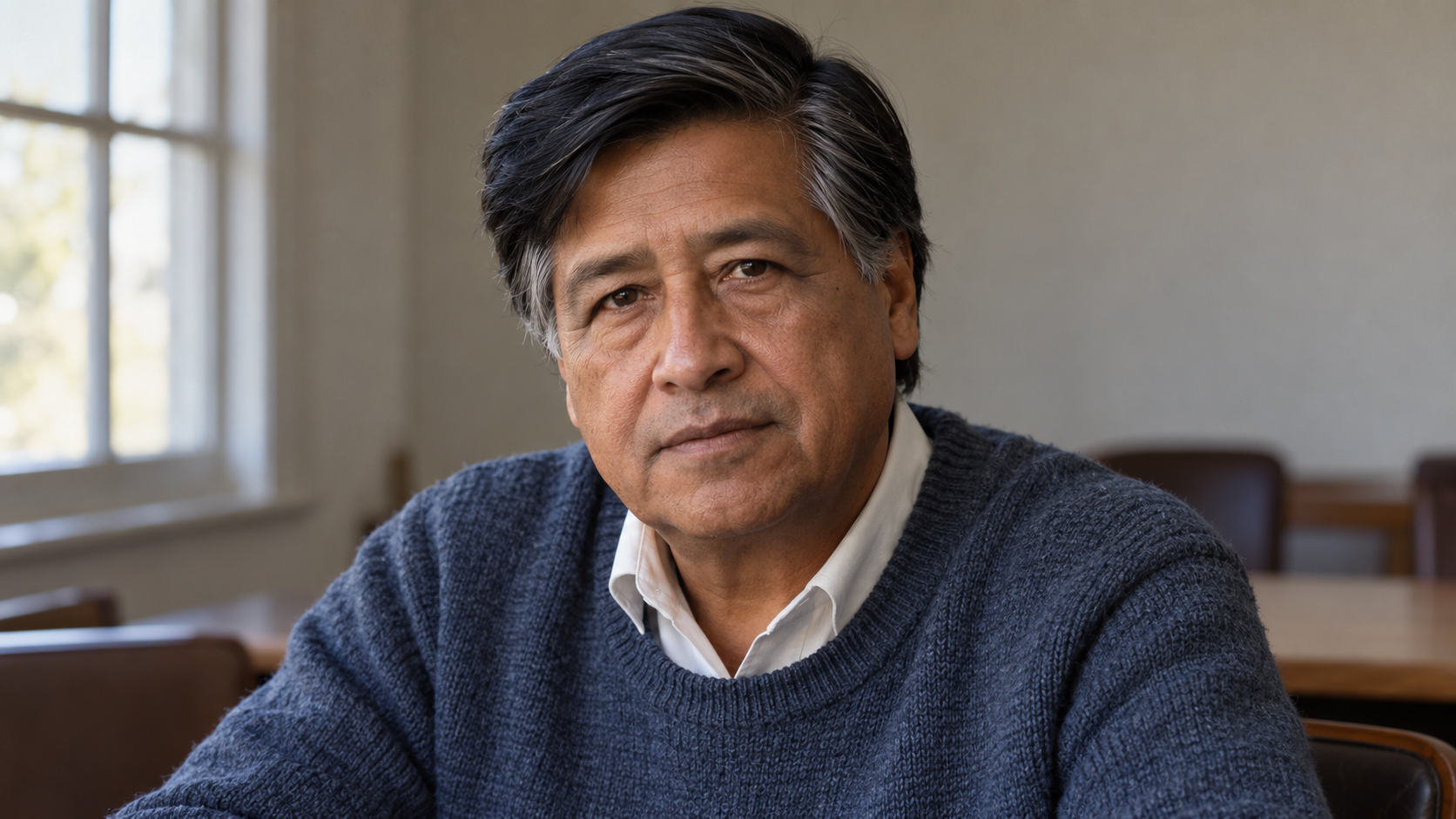
“Once social change begins, it cannot be reversed.”
Cesar Chavez made this assertion in his November 9, 1984 address to the Commonwealth Club of California in San Francisco. The United Farm Workers preserves the speech, and the Congressional Record later reproduced the passage. Its surrounding sentences concern learning, pride, and a reduced willingness to accept oppression. That context is essential to understanding the claim. Chavez was describing changes in people’s awareness and capacity, not announcing that every labor agreement or legislative gain would be permanently secure. His speech connected the farmworkers’ movement with wider participation in public life and with expectations that extended beyond the survival of a single organization.
The absolute wording gives the line force, but it also requires careful reading. Political rights and working conditions can deteriorate, and institutions can lose strength. A reader should not turn the sentence into a guarantee against those possibilities. The more specific insight concerns what people carry with them after they learn, organize, and act together. An experience of effective participation can alter their understanding of what is possible. Even a later setback does not necessarily erase that experience. This interpretation keeps the passage connected to the examples that follow it, while allowing history to remain more complicated than a slogan’s confident surface.
Education in this argument is a source of standing. Someone who acquires a skill or understands a rule has a different relationship to those who previously controlled information. Collective experience can work similarly: people learn who makes a decision, what evidence matters, and how pressure can be brought to bear. Readers can see that distinction in a neighborhood campaign whose immediate request fails but whose participants become better prepared for the next public meeting. Such an outcome does not make the failure irrelevant. It does, however, show why the effects of civic action cannot always be measured solely by the first decision announced.
The quotation invites reflection on what a movement leaves behind in its participants. Lasting knowledge and confidence deserve attention alongside formal victories. At the same time, celebrating these effects should never remove the need to examine leaders, tactics, or the treatment of individuals within a movement. A worthy public goal does not place its organizers above scrutiny. The useful political lesson is narrower and more demanding: people who gain the ability to speak and act for themselves change the conditions under which power is exercised. Preserving that ability requires continued education, accountable institutions, and room for people to challenge authority, including their own representatives.
Chavez’s statement comes from his November 1984 Commonwealth Club address in San Francisco. The UFW preserves the speech’s full text.
A 2015 Congressional Record tribute reproduces the sentence and identifies the same address. The surrounding examples concern education, pride, and fear.
The passage distinguishes people’s growing capacity from the fortunes of an organization. Learning and collective experience can outlast a particular campaign.
The sentence should not be read as proof that political gains are irreversible. Formal rights and institutions still require protection and accountability.
A campaign can leave participants with knowledge about decisions, procedures, and organizing even when its immediate outcome disappoints.
That legacy should be assessed alongside the conduct of leaders. Public purpose does not exempt a movement or its representatives from scrutiny.
Explore more "Quotes of The Day"
Discover more notable quotes from influential voices across politics, science, business, technology, sports, and culture. Each quote offers insight into how ideas, beliefs, and decisions shape the world around us.