

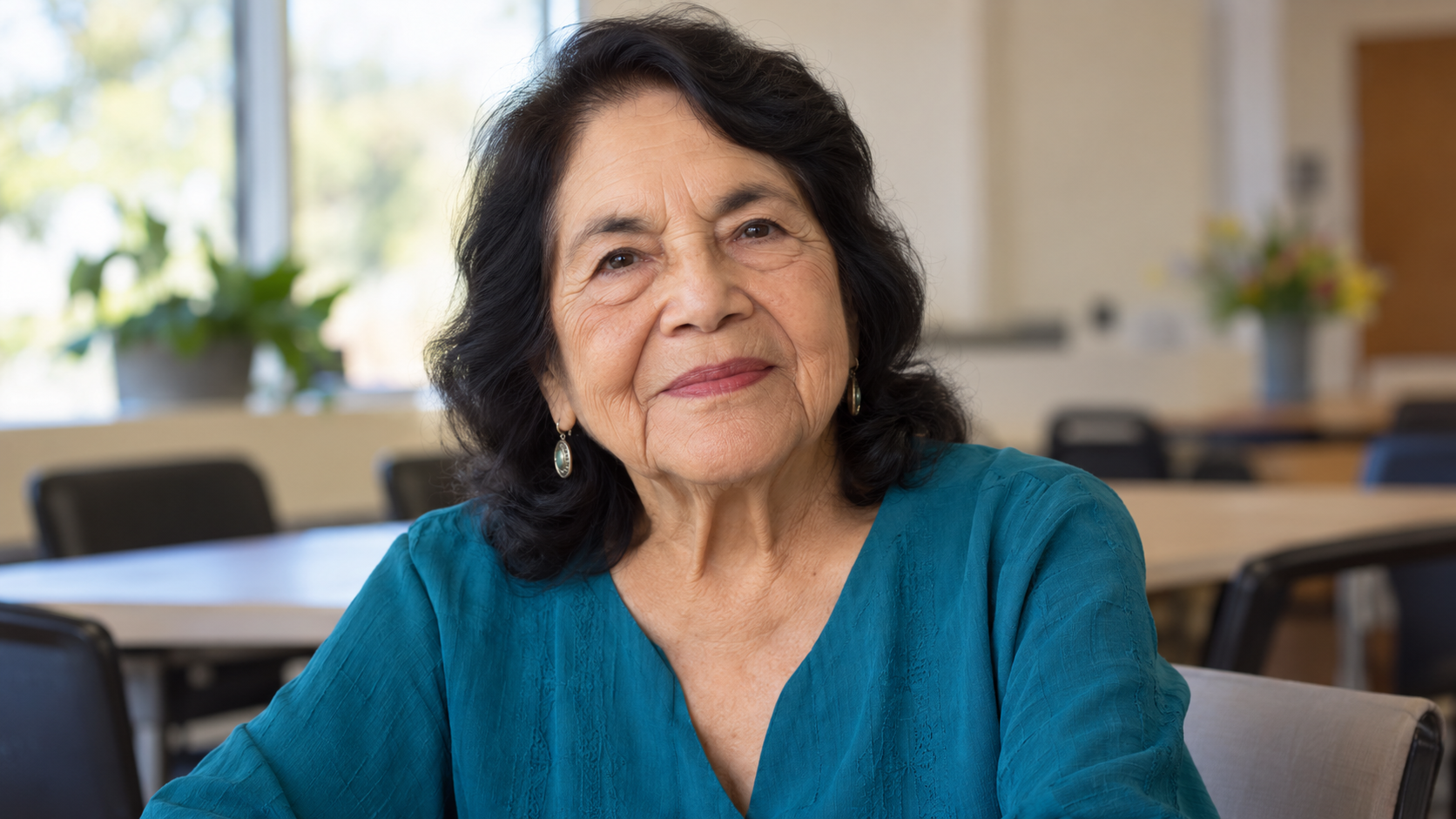
“every moment is an organizing opportunity”
Dolores Huerta’s observation makes political participation part of ordinary time. The opening clause appears in a longer quotation reproduced by the Obama White House in its March 8, 2016 International Women’s Day article. Her foundation also prints the statement in its impact report. The year here identifies the documented White House publication, rather than a verified date when Huerta first coined the phrase. That distinction avoids inventing an original occasion for a saying associated with many years of organizing. The words express a practical outlook: a conversation or a local encounter may reveal a shared concern and a possible route to collective action.
An organizing opportunity is different from an opportunity to deliver a speech. Organizing begins with finding out what people experience, what they want changed, and whether they are prepared to work with others. The foundation’s description of house meetings emphasizes conversation among neighbors and the development of local leadership. That setting helps make the short phrase concrete. A person arriving with every answer may miss the concern that matters most to the room. Listening can turn a private frustration into a question people recognize together. The next step is to give that question a form that can be investigated and acted upon.
For readers, the quotation suggests paying attention to connections between daily problems and public decisions. A difficult journey to work may raise questions about transit. A parent’s account of an inaccessible meeting may reveal a barrier to participation. Neither observation automatically determines the best policy, but both can begin useful inquiry. People can compare experiences, identify who controls a decision, and gather reliable information before choosing a demand. These are interpretive examples of the organizing outlook, not events attributed to Huerta. Their common feature is that civic action becomes possible through attention to circumstances that might otherwise be dismissed as isolated inconveniences.
The word every supplies encouragement, but it need not become a demand that people remain constantly available for political work. Effective organizing also depends on trust, boundaries, and sustainable commitments. An invitation is stronger when participants have a genuine choice about joining and a clear understanding of what they are asked to do. Huerta’s phrase is useful as a reminder of potential: leadership and initiative can emerge in places that receive little public attention. The moment becomes consequential when someone listens carefully, helps others recognize a shared concern, and turns that concern into an achievable next step with responsibility distributed across the group.
The excerpt is the opening clause of a longer saying reproduced in the White House’s March 2016 International Women’s Day article.
The Dolores Huerta Foundation also prints the saying in its impact report. The displayed year marks the documented publication, not an asserted first utterance.
The foundation describes house meetings as a way for neighbors to identify shared concerns and develop leadership. This provides a concrete organizing context.
The phrase emphasizes opportunities within everyday relationships. Listening and trust help determine whether a concern can become collective action.
Readers can begin by comparing experiences, gathering evidence, and identifying the person or institution responsible for a decision.
Participation should remain sustainable and voluntary. A useful opportunity offers people a clear next step rather than an undefined obligation to do everything.
Explore more "Quotes of The Day"
Discover more notable quotes from influential voices across politics, science, business, technology, sports, and culture. Each quote offers insight into how ideas, beliefs, and decisions shape the world around us.