

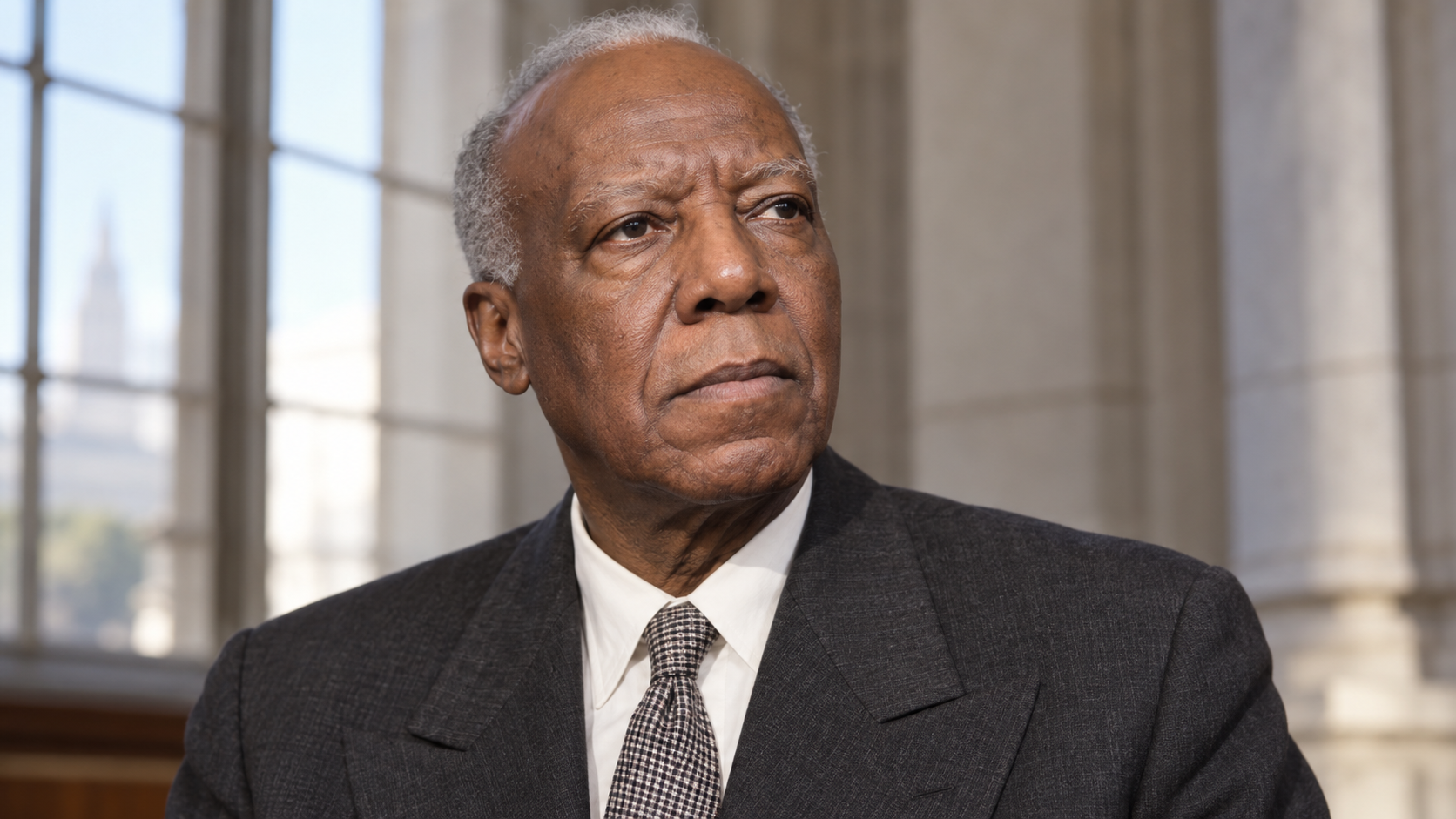
“We are the advanced guard of a massive, moral revolution for jobs and freedom.”
A. Philip Randolph opened the 1963 March on Washington for Jobs and Freedom by explaining what the assembled crowd represented. His phrase described participants as the leading edge of a larger moral change. The speech is preserved in a transcript published by the International Brotherhood of Teamsters, and President Barack Obama quoted the same sentence in a 2015 address recorded in official presidential documents. Its pairing of jobs with freedom was central to the march’s purpose. Randolph was a labor organizer as well as a civil rights leader, and his argument connected political standing with the conditions that make participation in society possible.
The surrounding address explains why access alone was not enough. A public accommodation opened to everyone could still be beyond the reach of someone unable to afford its services. Legal protection mattered, but so did employment, education, and the distribution of economic opportunity. Randolph’s moral vocabulary put these concerns within one account of human dignity. He did not treat the march as a collection of unrelated requests. The quotation identifies a shared aim that could bring different participants together without making their circumstances identical. Its ambition was to expand the practical meaning of freedom beyond an absence of formal exclusion.
The metaphor of an advanced guard gives a large demonstration a role within longer work. Those present were not the whole movement, and the event did not complete its task. A public gathering could make demands visible, strengthen relationships, and show officials that delay had consequences. Afterward, participants still needed to work in their own communities. Readers can apply that distinction to civic events today. Attendance may matter, but it becomes more consequential when people know the next decision they want to influence and the responsibilities they are prepared to share. A crowd’s size is evidence of attention; sustained organization turns attention into continuing pressure.
Randolph’s combination of jobs and freedom also offers a standard for evaluating political promises. A policy can remove a prohibition while leaving many people without a realistic way to benefit. Another can improve material conditions while leaving participation dependent on arbitrary authority. The quote encourages readers to examine both dimensions together. This is an interpretation of its democratic argument, rather than an endorsement of every proposal in the original speech. The enduring question is whether public arrangements allow people to live with dignity and exercise a meaningful voice. Moral language earns its force when those practical consequences remain visible in the decisions made.
Randolph’s sentence comes from his opening address at the August 1963 March on Washington for Jobs and Freedom.
The Teamsters publish the transcript, and an official 2015 presidential document reproduces the same sentence while recalling the march.
The address connects civil rights with employment and economic opportunity. Opening an institution does not ensure that people can afford to use it.
The advanced-guard metaphor presents the march as part of a continuing movement. Participants would carry its work back into their communities.
Readers can assess whether a political promise provides both formal access and a practical opportunity to benefit.
A demonstration can concentrate attention, but follow-through requires a specific objective and shared responsibility beyond the event itself.
Explore more "Quotes of The Day"
Discover more notable quotes from influential voices across politics, science, business, technology, sports, and culture. Each quote offers insight into how ideas, beliefs, and decisions shape the world around us.