

“The greatest dangers to liberty lurk in insidious encroachment by men of zeal, well-meaning but without understanding.”
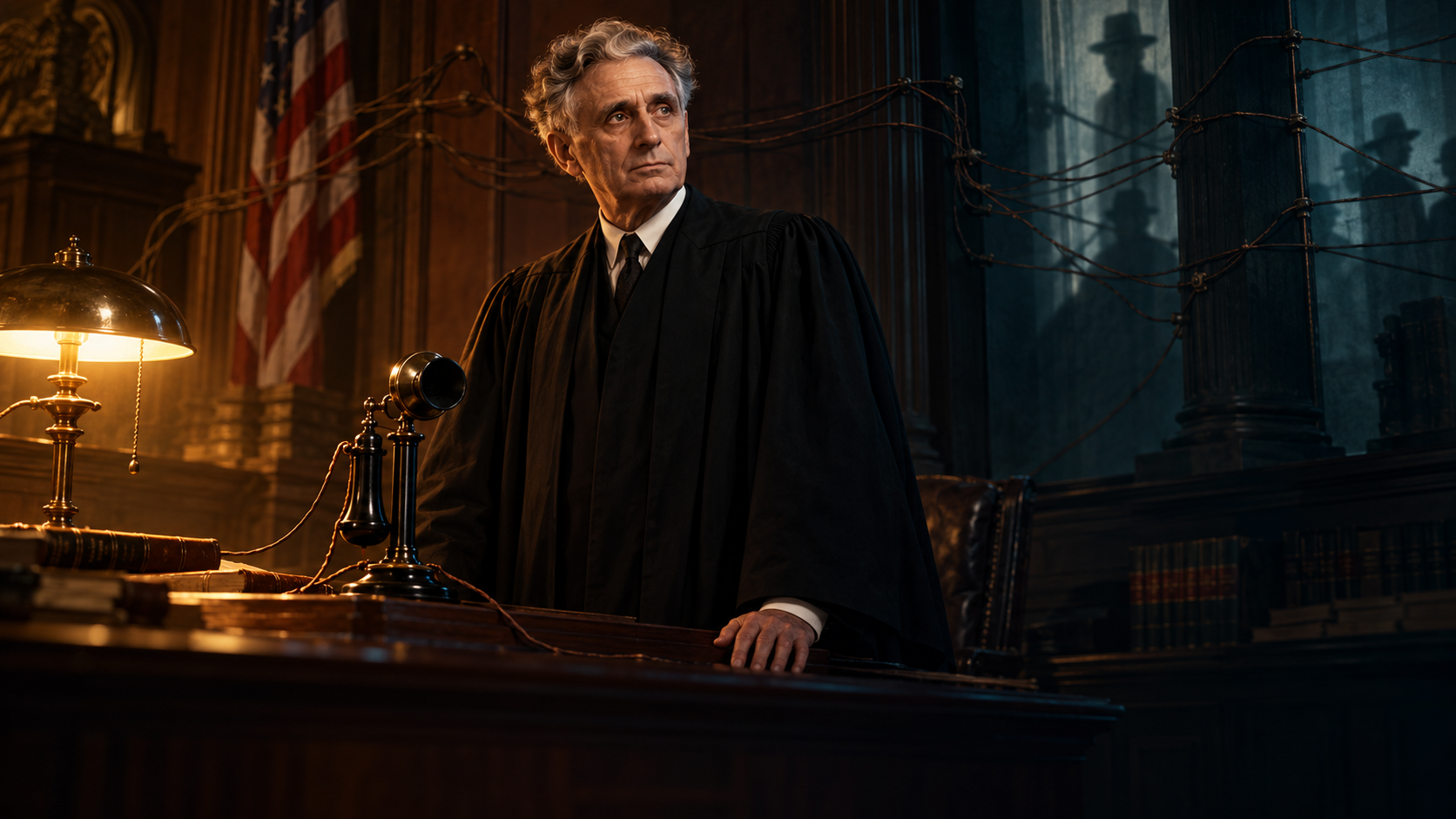
Justice Louis D. Brandeis wrote this warning in his dissent in Olmstead v. United States, decided by the Supreme Court on June 4, 1928. Federal officers had listened to telephone conversations through wiretaps installed outside the defendants' premises. The Court's majority concluded that the Fourth Amendment did not apply because officials had made no physical entry and seized no tangible object. Brandeis argued that constitutional protection could not be confined so narrowly. He described privacy as part of a broader right to be left alone and placed the featured sentence after a warning that benevolent governmental purposes can still endanger freedom. September 19 is this post's calendar assignment, not the date of the decision.
The sentence focuses on a political danger that can be harder to recognize than open repression. Brandeis did not reserve his suspicion for obviously malicious officials. He asked readers to notice how earnest people can expand public power step by step while believing that their objective justifies the method. The word "insidious" matters because the loss may arrive through procedures presented as reasonable, temporary, or necessary. That framing shifts attention from an official's character to the authority being exercised. A democratic system cannot rely only on the good motives of those holding office. It needs rules, review, and public habits capable of testing means as carefully as ends.
The quotation should remain connected to its legal setting and to the fact that Brandeis was dissenting. His view did not control the 1928 judgment, and it does not answer every dispute about privacy, policing, or national security. Governments sometimes have legitimate reasons to investigate wrongdoing, and constitutional analysis also asks about warrants, statutory authority, expectations of privacy, and available remedies. Decades later, Katz v. United States rejected the idea that Fourth Amendment protection always depends on physical trespass, helping make Brandeis's concern look prescient. Even so, citing one celebrated sentence cannot replace the work of deciding where a particular safeguard should operate.
In modern politics, the warning applies whenever new capacity arrives before settled rules for its use. Digital records, location data, facial recognition, and automated analysis can make oversight seem slow compared with administration. Brandeis's test is useful precisely because it does not require proving bad faith. Citizens and lawmakers can ask what information is collected, who may examine it, how long it is kept, how errors are challenged, and whether the same power would appear acceptable in an opponent's hands. Those questions turn an abstract defense of liberty into institutional practice. Good intentions may explain why a policy began; they do not determine whether its reach remains justified.
Olmstead arose from federal wiretapping used to investigate a large Prohibition-era bootlegging operation. The majority treated the absence of a physical entry or tangible seizure as decisive under the Fourth Amendment.
Brandeis's dissent took a broader view of constitutional purpose. He argued that private thought and communication needed protection even when technology allowed officials to listen without crossing a doorway.
The warning is directed at methods, not simply motives. A public official may sincerely seek safety or efficient enforcement while adopting a power that gradually becomes difficult to supervise or limit.
That is why procedural safeguards matter before abuse is proved. Clear authorization, independent review, narrow scope, and a path to challenge errors reduce the need to trust any officeholder's intentions alone.
The dissent did not become the law of the case in 1928. Later privacy doctrine moved beyond the majority's strict focus on physical intrusion, but present disputes still require attention to specific facts and governing law.
The quote remains useful as a question for democratic design: does a proposed power stay acceptable when its operator changes, its original emergency passes, or the technology becomes cheaper and more pervasive?
Explore more "Quotes of The Day"
Discover more notable quotes from influential voices across politics, science, business, technology, sports, and culture. Each quote offers insight into how ideas, beliefs, and decisions shape the world around us.