

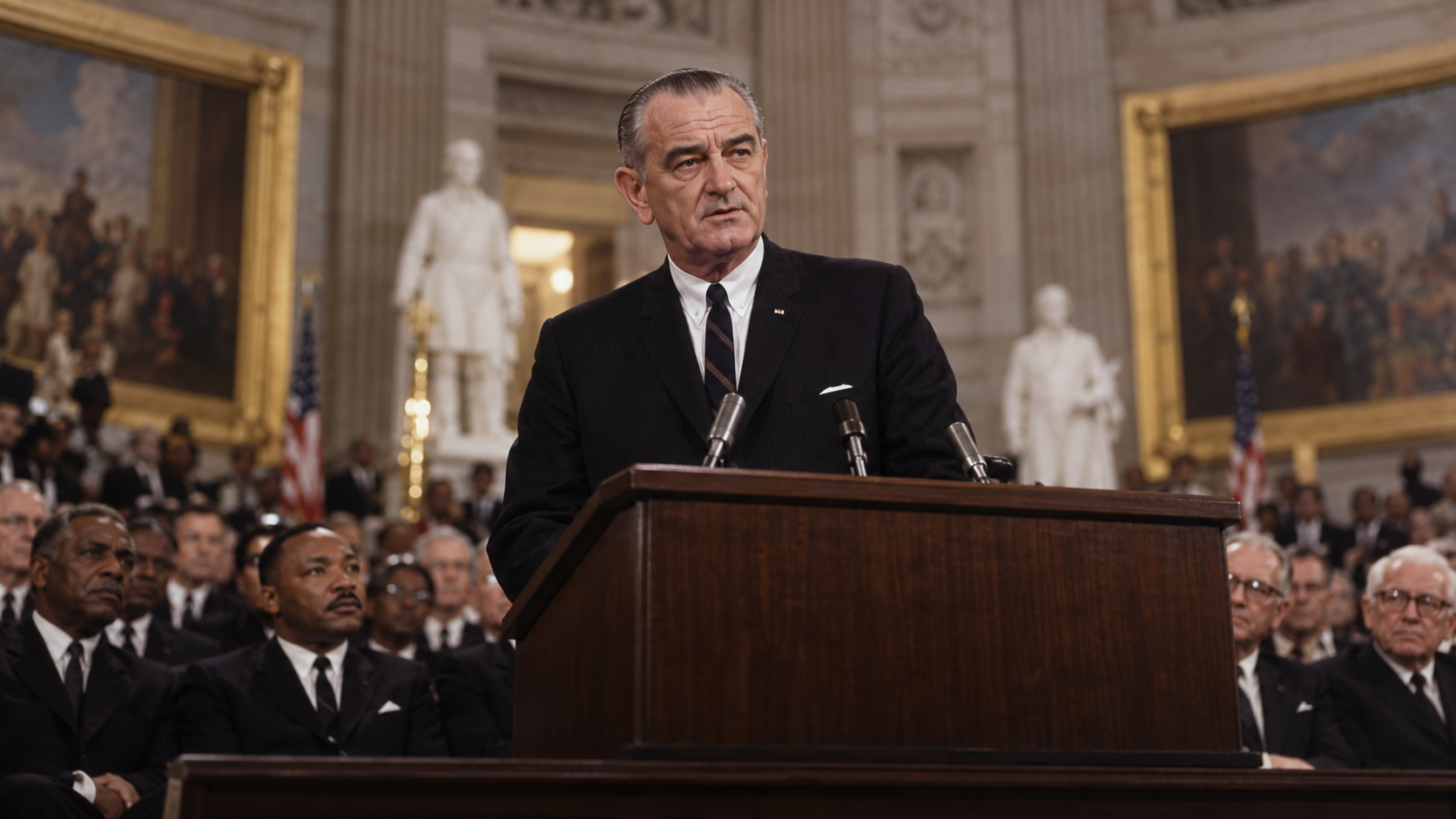
“The vote is the most powerful instrument ever devised by man for breaking down injustice…”
Lyndon B. Johnson used these words in the U.S. Capitol Rotunda on August 6, 1965, as he signed the Voting Rights Act. The featured line is a shortened excerpt marked with an ellipsis. Johnson continued by describing the vote as a means of destroying walls that imprison people because they are different. The law responded to a long record of literacy tests, intimidation, violence, and administrative barriers used to suppress Black voting, especially in the South. It followed organizing and sacrifice by local citizens and civil-rights workers, along with national pressure intensified by events in Selma. September 28 is the series date, not the signing anniversary.
Calling the vote an instrument emphasizes use. A right written into law can open a door, but citizens, organizers, officials, courts, and enforcement agencies determine whether people can pass through it. In the surrounding remarks, Johnson urged registration, voting, education, and leadership. The sentence therefore does not portray the ballot as a ceremonial symbol. It presents voting as a means for changing representation, policy, and the distribution of public attention. Power comes from repeated participation and from rules that prevent officials from deciding whose voice will count. The law and the individual act of voting support one another.
The quotation should not imply that elections alone dismantle every injustice or that the 1965 law completed the work. Political influence also depends on district design, access to information, campaign structures, administration, and the ability to challenge discrimination. The Voting Rights Act produced major gains, but its operation has been altered by later legislation, enforcement choices, and court decisions. Johnson's own record also contained grave contradictions, including escalation of the Vietnam War. Recognizing the importance of the signing does not require treating presidential leadership as the sole cause or his administration as morally uncomplicated.
For present politics, the instrument metaphor directs attention to maintenance. A tool must be available, understood, protected, and used. Citizens can ask whether registration systems are accurate and accessible, polling resources are distributed fairly, language and disability needs are met, ballots are counted consistently, and remedies arrive before exclusion becomes irreversible. They can also examine whether elected institutions respond after participation occurs and whether voters can evaluate that response. Johnson's line remains powerful because it connects a basic right to an outcome: breaking down injustice. That connection must be demonstrated through institutions that convert equal access to the ballot into accountable public power.
Johnson spoke in the Capitol Rotunda on August 6, 1965, immediately before signing the Voting Rights Act. The law targeted practices used to deny Black citizens the vote despite constitutional guarantees.
The ceremony followed years of local organizing, litigation, federal debate, and violence against civil-rights participants. Selma brought national attention, but the movement and its demands extended far beyond one march or president.
The word "instrument" treats voting as a practical means rather than a symbolic possession. Registration, informed choice, turnout, fair administration, and responsive representation determine how the tool operates.
The full sentence links the ballot to breaking down injustice and walls of exclusion. Its purpose is political agency: people previously denied a voice can help alter the institutions governing their lives.
The Voting Rights Act did not end every barrier, and its protections have changed through later laws, enforcement, and court decisions. Elections also interact with districting, money, information, and administrative capacity.
The quote remains relevant as a maintenance standard: protect equal access, correct errors promptly, measure unequal burdens, and judge whether participation produces accountable government rather than only formal compliance.
Explore more "Quotes of The Day"
Discover more notable quotes from influential voices across politics, science, business, technology, sports, and culture. Each quote offers insight into how ideas, beliefs, and decisions shape the world around us.