

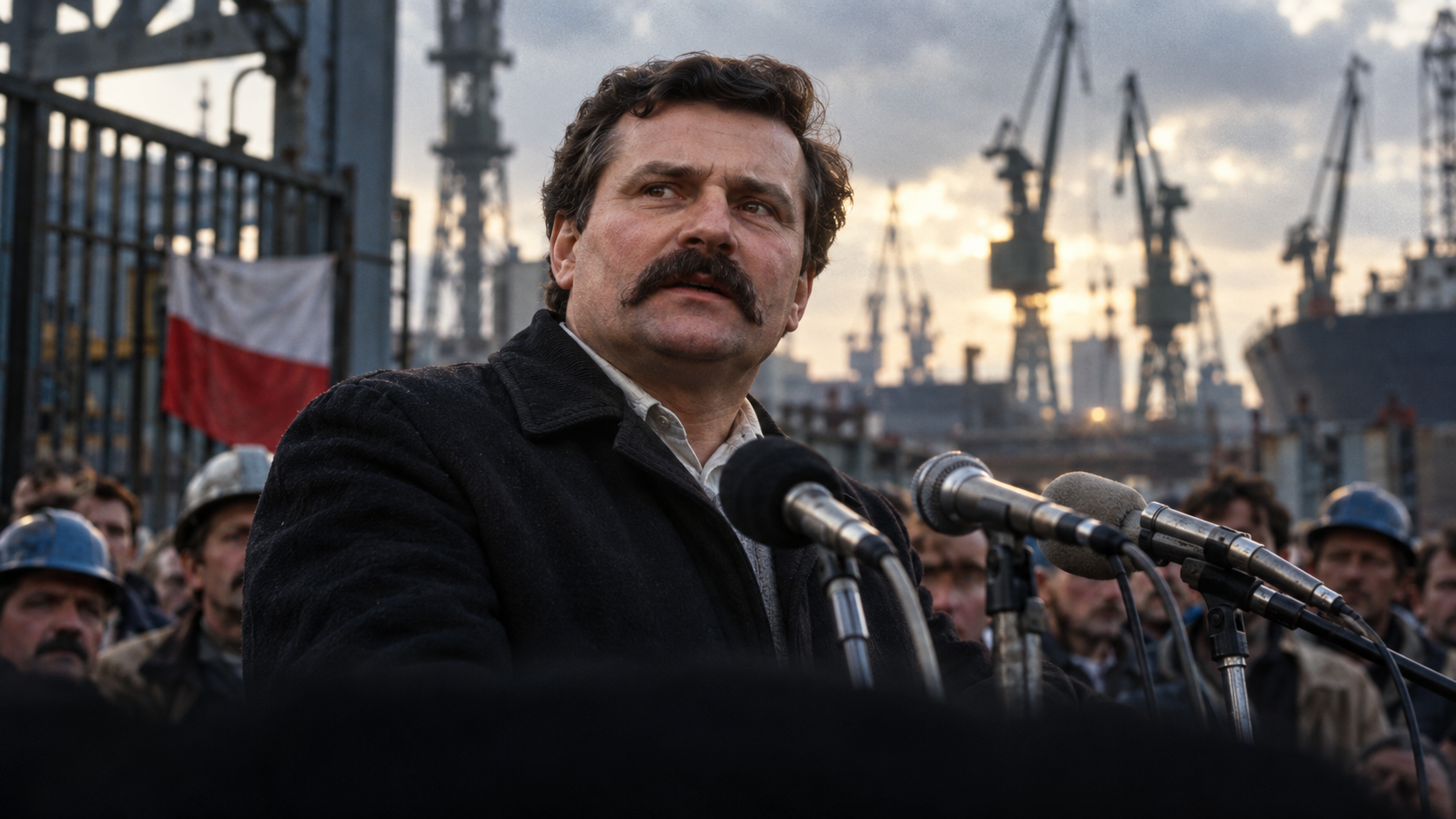
“As a nation we have the right to decide our own affairs, to mould our own future.”
Lech Wałęsa included this sentence in his Nobel lecture for the 1983 Peace Prize. Poland's authorities had outlawed the independent Solidarity trade union and imposed martial law in December 1981. Wałęsa had been interned and remained under pressure after his release. He did not travel to Oslo because he feared that the government might prevent his return; his wife, Danuta Wałęsa, accepted the prize, while his lecture was presented at the ceremony. The featured words followed demands for union freedom, the release of imprisoned activists, and dialogue between state authorities and society. September 29 is the calendar assignment and also Wałęsa's birthday, though the quotation comes from December.
The sentence joins collective rights to practical self-government. "Our own affairs" includes more than diplomatic sovereignty. In the lecture's immediate setting, Polish workers sought independent organization, the ability to negotiate, freedom from fear, and a public role outside the ruling party's monopoly. The right to shape the future required institutions through which people could speak and act together. Wałęsa paired that claim with insistence on nonviolence and agreement. Self-determination was not presented as isolation or unlimited authority; it depended on restoring channels of association and real dialogue inside the nation.
The quotation can be misread if national language is separated from democratic limits. A government may claim to embody a nation while silencing citizens, and a majority may invoke sovereignty while restricting minorities or independent institutions. Wałęsa's own later presidency involved difficult economic reforms and political conflict, reminding readers that opposition leadership and democratic governance require different judgments. The 1983 line does not settle how a country should distribute resources, organize executive power, or balance competing rights. It establishes who must possess a meaningful voice in those decisions and rejects control maintained through coercion.
In modern politics, the sentence supports a layered idea of political agency. Nations need freedom from external domination, while citizens need freedom to organize, criticize, bargain, vote, and replace leaders. Neither level is secure when public institutions treat society as an audience rather than a participant. The history of Solidarity also shows that broad alliances can build leverage without erasing internal differences. Workers, intellectuals, religious networks, and families carried distinct interests into a common challenge. That pluralism made negotiation necessary. Wałęsa's claim remains relevant when self-determination is measured by the public's continuing capacity to shape the future, not by a leader's assertion that the future has already been decided.
Wałęsa's Nobel lecture was presented in Oslo on December 11, 1983. He remained in Poland because he feared that authorities would not allow him to return if he traveled; Danuta Wałęsa accepted the prize.
Solidarity had emerged from the 1980 Gdansk shipyard strikes as an independent trade union and mass social movement. It was later outlawed under martial law, and many activists were detained or prosecuted.
The phrase "our own affairs" referred to both national autonomy and the public's right to participate inside Poland. Independent unions, association, negotiation, and dialogue were concrete parts of that claim.
Wałęsa paired self-determination with nonviolence. The lecture argued that Poland's crisis required agreement between authorities and the people rather than coercion or permanent exclusion.
National sovereignty does not automatically create democratic participation. Governments and majorities can invoke the nation while limiting dissent, minority rights, or independent institutions.
The line's continuing test is whether citizens retain the organized capacity to influence decisions, contest leaders, and revise public direction. A future is self-determined only when that capacity remains real.
Explore more "Quotes of The Day"
Discover more notable quotes from influential voices across politics, science, business, technology, sports, and culture. Each quote offers insight into how ideas, beliefs, and decisions shape the world around us.