

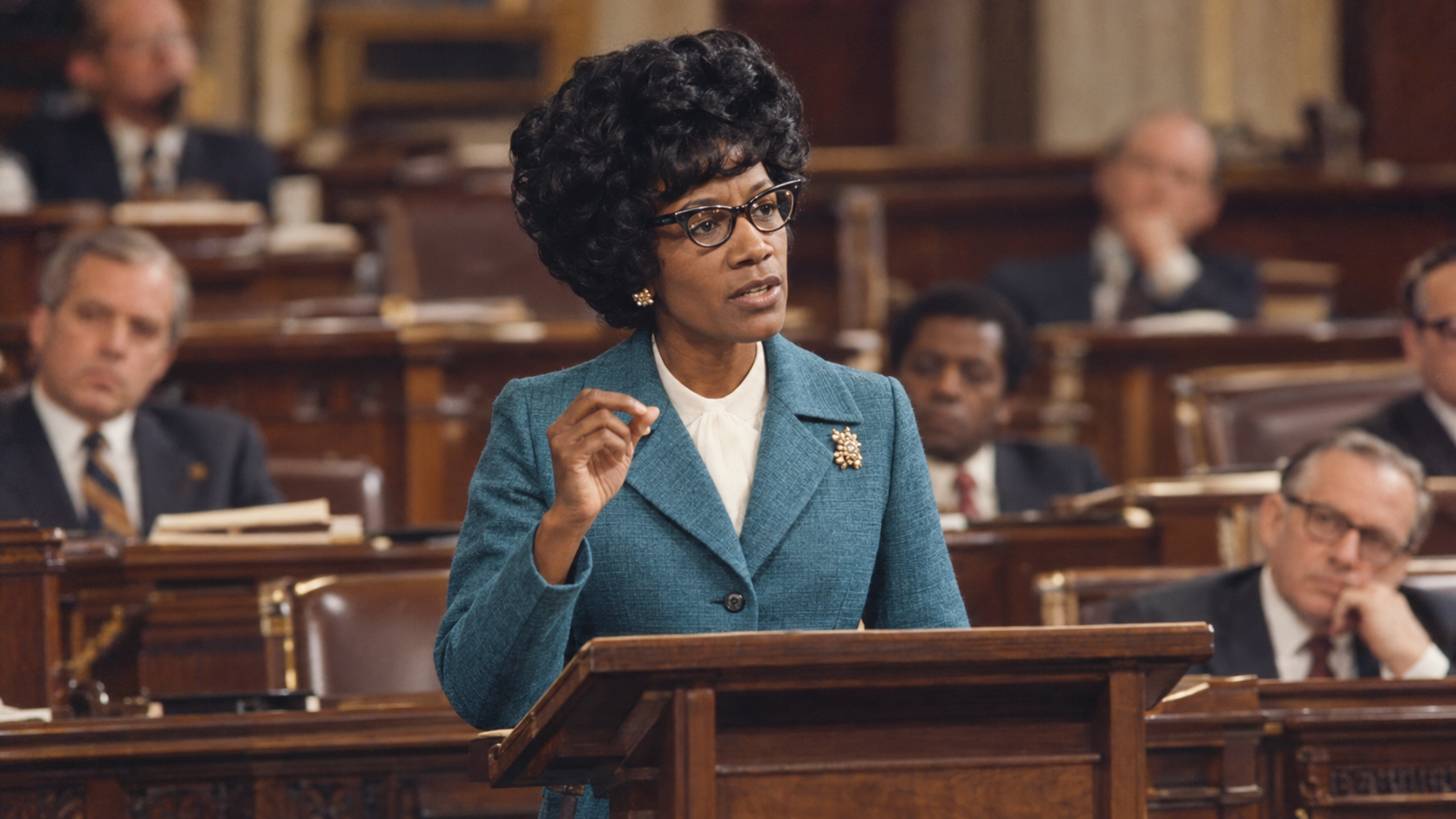
“As there were no black Founding Fathers, there were no founding mothers—a great pity, on both counts.”
Shirley Chisholm spoke these words in the U.S. House of Representatives on August 10, 1970, while arguing for the Equal Rights Amendment. She had entered Congress the previous year as the first Black woman elected to the chamber. In the surrounding passage, Chisholm said the Constitution had been designed to protect white male citizens and that the founding generation's professed equality had not been assured to daughters. Her paired observation about Black founders and founding mothers compressed exclusions of race and sex into one sentence. September 30 marks this series entry, not the speech's anniversary.
The line challenges both law and public memory. Founding stories often describe a small group of men as though their experience naturally represented the nation. Chisholm showed how that frame affects who appears capable of authorship, whose grievances count as constitutional questions, and whose absence is treated as normal. The phrase "on both counts" refuses to rank racial and sex discrimination as unrelated or competing concerns. That was consistent with her position in Congress, where she repeatedly argued that people could encounter overlapping barriers and that equal opportunity required examining institutions across those lines.
The quotation also has limits that its surrounding speech helps clarify. Chisholm was making a legislative argument for the Equal Rights Amendment, not claiming that a revised founding roster alone would correct inequality. Representation can broaden experience and agenda setting, but officeholders still make choices that require public scrutiny. The categories in the sentence are historically situated and cannot capture every form of exclusion involving class, disability, sexuality, Indigenous sovereignty, or immigration status. The Equal Rights Amendment itself passed Congress in 1972 but did not secure recognition as part of the Constitution through the conventional ratification process by the deadline, and its legal status remains contested.
For contemporary politics, Chisholm's sentence offers a method for reviewing inherited institutions. Begin by asking who was present when the rules were written, who was excluded, and how those conditions shaped the resulting definition of rights. Then examine whether later representation has changed procedure, policy, and enforcement. Symbolic inclusion matters because public authority is easier to imagine when more people visibly exercise it, yet visibility should lead to measurable access and accountability. Chisholm did not ask the House simply to regret an incomplete past. She used that history to argue that lawmakers still had the power and responsibility to finish work their predecessors left undone.
Chisholm delivered the speech in the House on August 10, 1970, in support of the Equal Rights Amendment. She connected the amendment to a constitutional history that had centered white male citizenship.
Elected in 1968 and seated in 1969, Chisholm was the first Black woman in Congress. Her position made the exclusion she described both a historical argument and a visible fact about the chamber's membership.
The sentence examines authorship as a form of power. Who writes founding rules influences which experiences become normal, which injuries receive names, and who appears qualified to govern.
By closing with "on both counts," Chisholm linked racial and sex exclusion without treating either as secondary. The speech framed equality as a constitutional obligation requiring legislative action.
Broader representation does not automatically guarantee equal policy, and the sentence cannot name every community excluded from the founding order. It should begin institutional review rather than end it.
Its continuing relevance lies in moving from memory to responsibility: study who shaped a rule, measure whom it serves now, and use present authority to correct exclusions that inherited language or practice still carries.
Explore more "Quotes of The Day"
Discover more notable quotes from influential voices across politics, science, business, technology, sports, and culture. Each quote offers insight into how ideas, beliefs, and decisions shape the world around us.