

Russell Brand Sentenced to 10 Years, 6 Months for Rape and Assaults
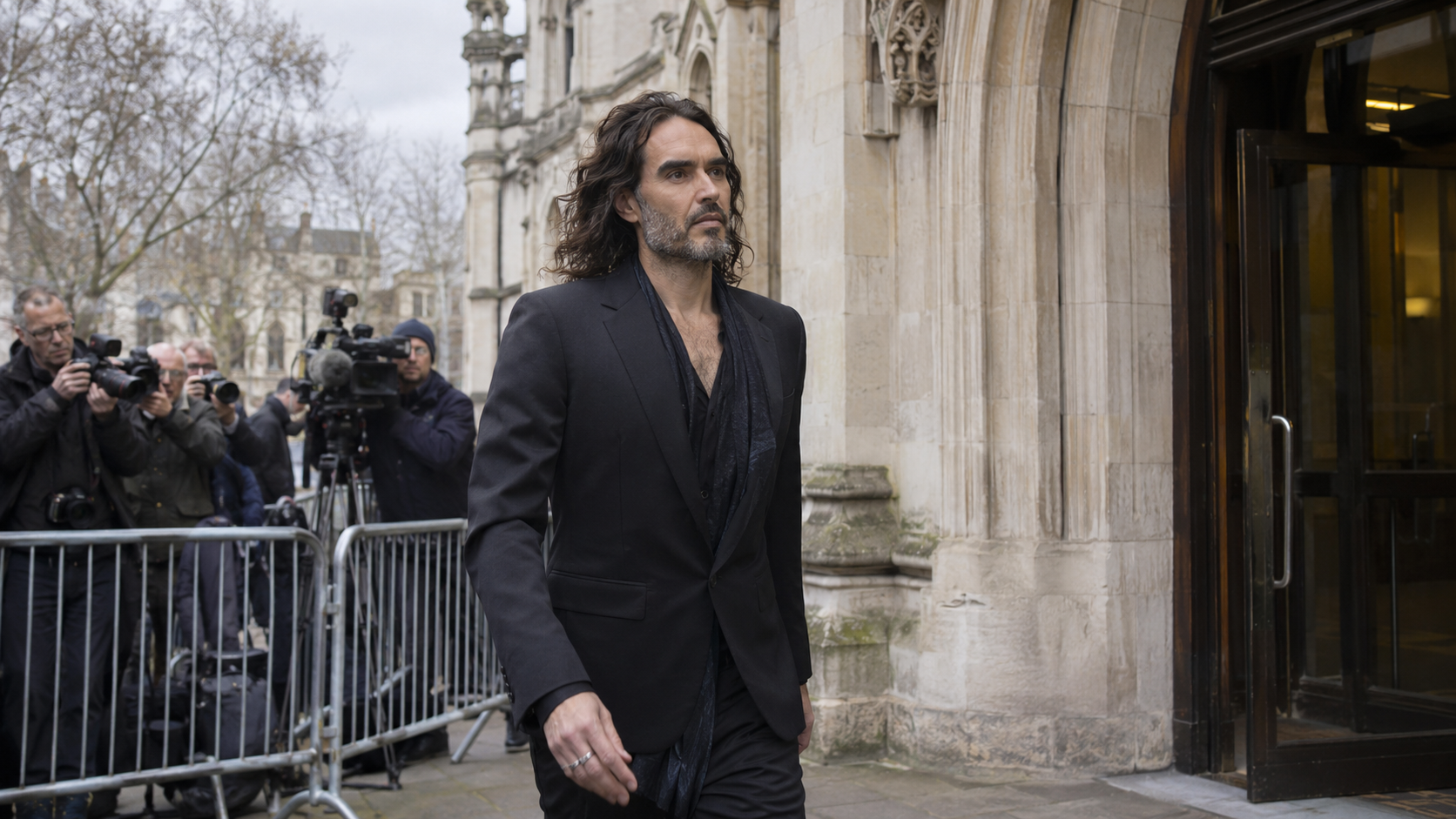
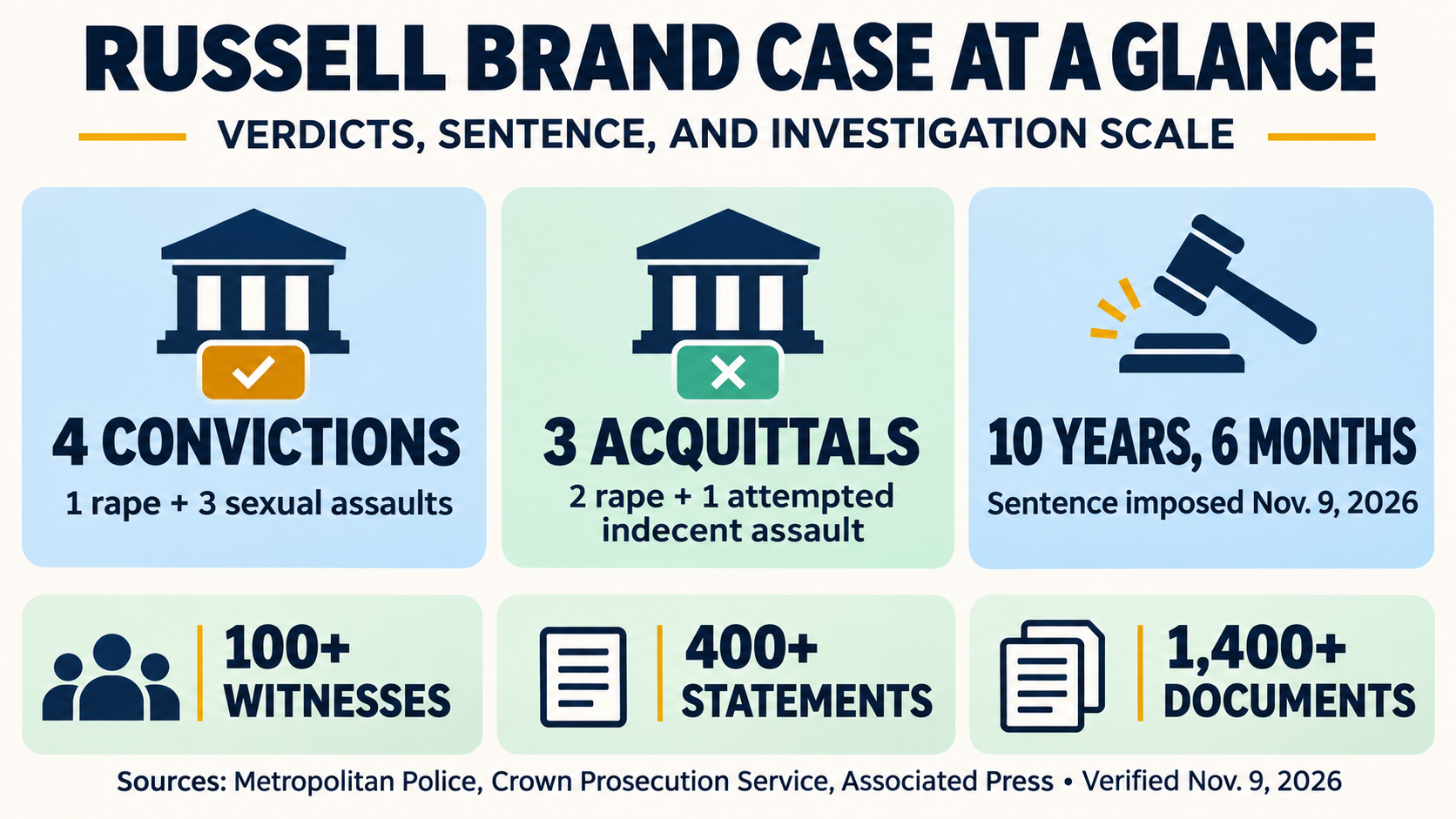
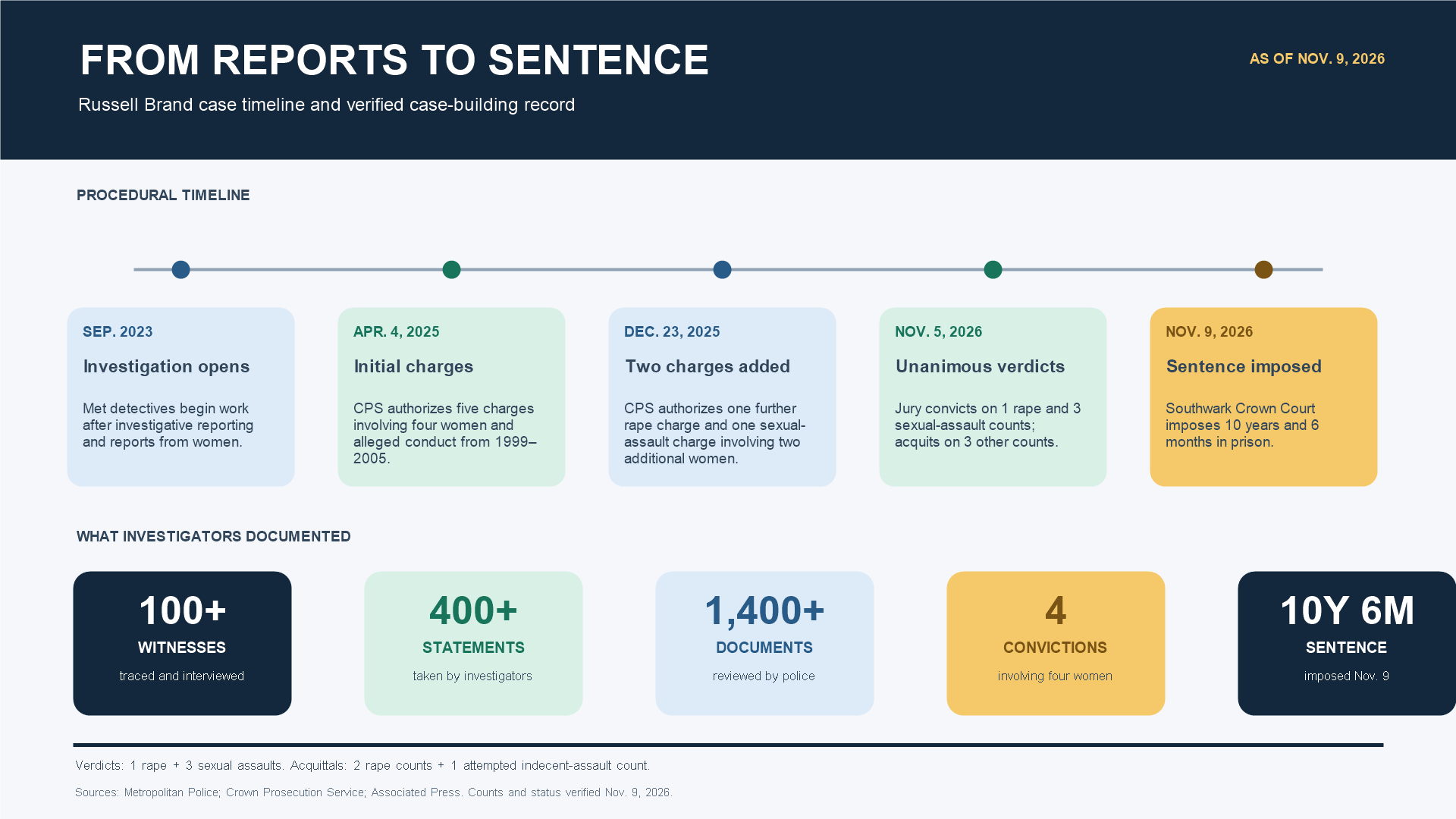
A London judge sentenced Russell Brand to 10 years and six months in prison Monday after a jury convicted the former actor and comedian of raping one woman and sexually assaulting three others. The sentence, imposed at Southwark Crown Court on Nov. 9, followed unanimous guilty verdicts returned four days earlier at the end of a four-week trial.
The development is current because the sentencing hearing supplied the first confirmed prison term in the case, replacing the post-verdict expectation of custody with a specific judicial order.
The convictions concern conduct between 2004 and 2009, a period when Brand’s public profile expanded from stand-up comedy into radio, television and film. The jury found him guilty of one count of rape and three counts of sexual assault involving four women. Jurors acquitted him of two other rape counts and one count of attempted indecent assault. That split result matters: the prison term punishes the four offenses proved at trial, not every allegation that had been placed before the jury.
Brand, 51, had denied the charges and maintained that his sexual encounters were consensual. After the guilty verdicts on Nov. 5, the judge remanded him in custody rather than allowing him to remain free until sentencing. The defense urged the court to consider his limited prior criminal record, charitable work, recovery from addiction and family circumstances. Prosecutors argued that Brand’s fame and influence had helped create access and a sense of impunity.
What the judge said
Mr Justice Joel Bennathan described Brand’s conduct as showing a “casual and arrogant disregard” for women’s right to say no. He placed the crimes in the context of Brand’s growing celebrity and said he had become a sexual predator during that period. The judge also made clear that he would disregard the contents of the 2023 television documentary that first publicized allegations and would not punish Brand for accusations on which the jury returned not-guilty verdicts.
That separation reflects the court’s different roles. Jurors decided guilt one charge at a time after hearing the evidence and the defense. The judge then assessed the seriousness of the four proven offenses and the overall criminality, while considering aggravating and mitigating factors. Sentencing does not reopen the acquittals or convert uncharged allegations into convictions.
The Associated Press reported the 10-year, six-month total shortly after Bennathan delivered his remarks. At the time of NewsStreets’ final check, a complete official transcript of the sentencing remarks had not yet appeared on the judiciary’s website. This article therefore does not assign a precise portion of the total to each count or state a release date. Those details should be taken from the written sentencing record when it is published, not inferred from commentary posted during live coverage.
How an older case was built
The Metropolitan Police opened its investigation in September 2023 after Channel 4’s Dispatches, The Times and The Sunday Times published allegations about Brand. Police said women who were not known to one another subsequently contacted investigators. Because the reported offenses were many years old, officers did not have the kind of forensic evidence, digital trail or closed-circuit television footage that can exist in a recent case.
Investigators instead reconstructed the circumstances around each report. According to the Metropolitan Police, detectives traced and spoke with more than 100 witnesses, took more than 400 witness statements and reviewed more than 1,400 documents. They assembled timelines and obtained historical floor plans and photographs connected to a former home and workplace. The agency said investigators also reviewed recordings, interviews, books and other public material to test chronology and compare Brand’s accounts with other evidence.
The Crown Prosecution Service initially authorized charges in April 2025 involving four women and reported conduct from 1999 to 2005. In December 2025, prosecutors authorized one additional rape charge and one additional sexual-assault charge concerning two more women and conduct reported in 2009. The eventual trial therefore asked one jury to decide seven counts involving six women.
Prosecutors described their method as suspect-centered: they focused on the defendant’s alleged conduct instead of relying on assumptions about how a victim should behave during or after sexual violence. The CPS said the women came forward independently and that the passage of time did not create a single expected response. It also emphasized a basic legal principle that consent must be freely given, can be withdrawn, and does not carry from one sexual act to another.
The verdicts and the limits of the record
The unanimous verdicts covered four offenses against four women. The Metropolitan Police said those offenses occurred in different settings, including a radio station, a recording set and Brand’s home. Reporting from the sentencing hearing described victim-impact statements addressing long-term anxiety, loss of confidence and the burden of being scrutinized in a case involving a famous defendant. British law gives complainants in sexual-offense cases lifelong anonymity, so NewsStreets does not identify them or include details that could reveal who they are.
The acquittals are equally part of the legal record. Jurors found Brand not guilty of two rape charges and one attempted indecent-assault charge. An acquittal means the prosecution did not prove that count beyond a reasonable doubt; it is not a partial conviction and should not be blurred into the guilty verdicts. The judge said the acquitted conduct would not affect the sentence.
Institutional questions extend beyond Brand’s prison term. The 2023 reporting prompted reviews at media organizations that had employed or commissioned him. Channel 4’s 2024 internal review said it found no evidence that senior leaders knew of the specific allegations later broadcast, but it concluded that a serious 2009 complaint by a staff member had not been properly investigated or escalated. Channel 4 apologized and said it had strengthened reporting and safeguarding routes.
The BBC separately acknowledged past workplace failings after reviewing Brand’s time at its radio services. Those reviews are not criminal verdicts and should not be presented as proof that every employer or colleague knew about the crimes. They do, however, document failures in how concerns were handled and have renewed attention on whether workers can report misconduct without fearing retaliation or professional harm.
What happens next
Brand began serving the sentence in custody. Any appeal would proceed through the courts and should be reported only when a filing or court announcement confirms it. At the final verification time for this draft, the sources reviewed did not establish that an appeal had been filed against either the convictions or the sentence.
The Metropolitan Police has said its investigation remains open and urged anyone with relevant information to contact investigators. An open investigation is not a new charge or a prediction of another trial. Any further allegation would require its own evidence review, charging decision and court process. It should not be added to the four convictions unless authorities announce a separate procedural development.
Monday’s sentence supplies a definitive punishment at the trial-court level for the four offenses the jury proved. It does not erase the distinction between convictions and acquittals, resolve every institutional question raised by the case or establish facts outside the verdicts. For readers following a fast-moving case, the most reliable guide remains the procedural record: four convictions, three acquittals, a 10-year, six-month prison sentence and no confirmed appeal as of this draft’s final check.
Brand Sentence Puts Survivors, Workplaces and Reporting Systems in Focus
Russell Brand’s 10-year, six-month prison sentence closes one stage of a case that asked four women to recount sexual violence in one of Britain’s most closely watched courtrooms. For communities, the consequence reaches beyond a famous defendant. The case shows what reporting can demand from victims, how years can pass before a complaint reaches court, and why workplaces need routes that allow concerns to move upward rather than disappear.
A unanimous jury convicted Brand of one rape and three sexual assaults involving four women. The offenses occurred between 2004 and 2009, when his career was growing across comedy, radio, television and film. Jurors acquitted him of two other rape counts and one count of attempted indecent assault. On Nov. 9, 2026, Mr Justice Joel Bennathan imposed the prison term at Southwark Crown Court.
The women are entitled to lifelong anonymity under British law. That protection is not a minor detail in a case that generated intense international attention. It is intended to prevent the criminal process from exposing a person’s identity simply because they reported sexual violence. News coverage, social posts and workplace discussion can all undermine that protection if they publish enough small details to make a person identifiable.
The cost of coming forward
Accounts presented during sentencing described consequences that lasted well beyond the assaults, including anxiety, diminished confidence and fear about how the public might react. The women also had to participate in an investigation and trial involving a defendant with a large audience and long public history. Police credited their persistence and said specialist officers and victim-support teams remained with them through the investigation and court process.
There is no single timeline for reporting sexual violence. Some people contact police immediately; others wait because they fear they will not be believed, worry about employment or family consequences, or need time to understand what happened. The CPS said the women in this case came forward independently after the 2023 reporting and that prosecutors are trained not to treat delay as proof that an account is false.
That does not mean every late report automatically results in a charge or conviction. The burden remained on prosecutors to prove each count beyond a reasonable doubt. The split verdicts demonstrate that the jury assessed the seven counts separately: four produced convictions and three produced acquittals.
Workplace reporting is part of the story
One of the convicted assaults involved a woman working on a media project in 2009. Channel 4’s later internal review concluded that a serious allegation made by a staff member that year was not investigated or escalated as it should have been. The broadcaster apologized and said it had strengthened safeguarding and whistleblowing systems.
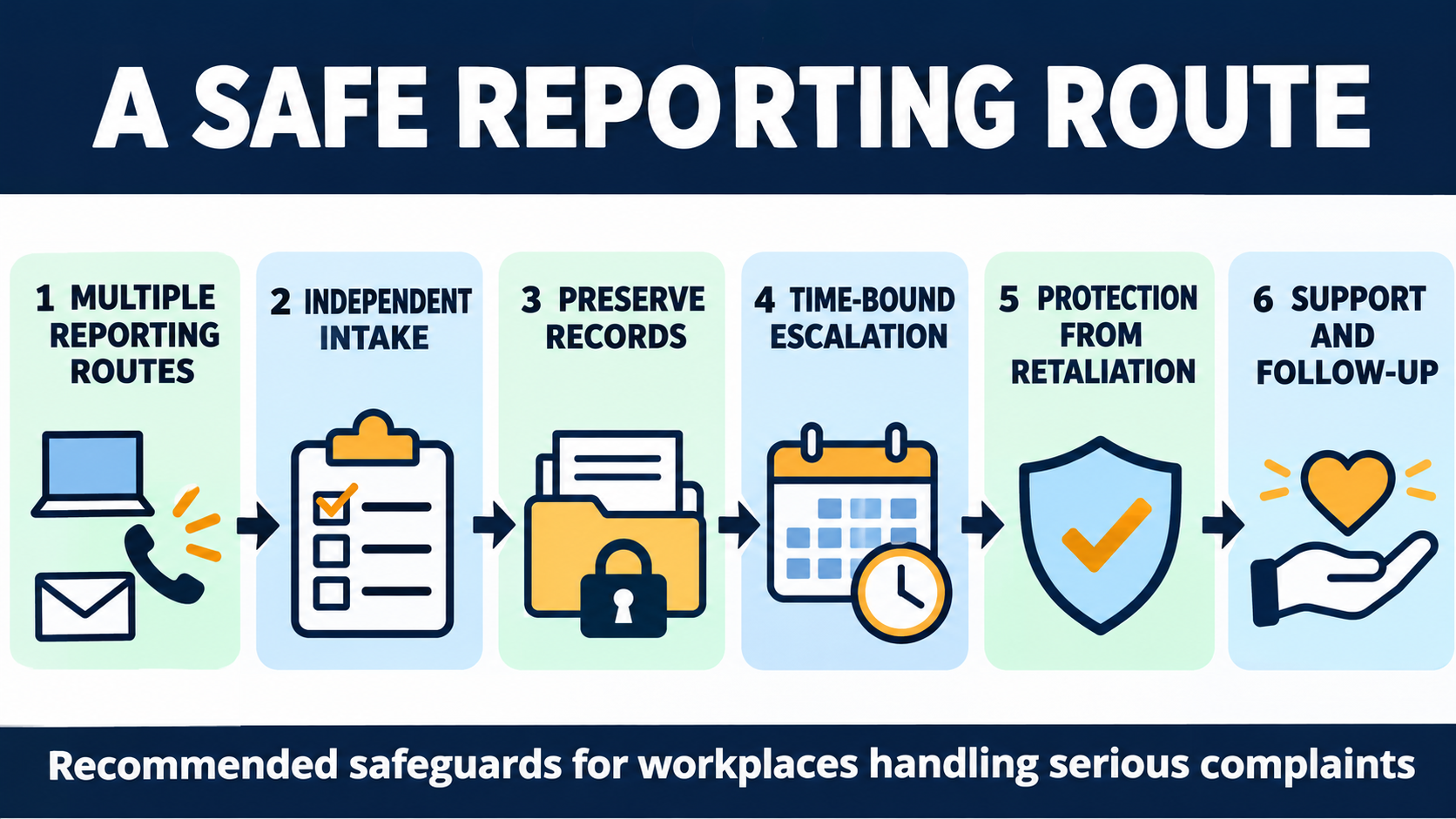
For workers, the lesson is practical. A reporting system must do more than exist on an intranet. Employees need to know where to report, managers need a clear duty to escalate, records need to be retained, and an organization must prevent retaliation. When a complaint concerns a powerful performer, executive or revenue source, those safeguards become more important, not less.
Colleagues also need guidance on what to do when they witness troubling behavior or receive a disclosure. They should preserve what they know, avoid conducting their own informal interrogation and follow established safeguarding or law-enforcement routes. Organizations should communicate what support is available without promising outcomes they cannot guarantee.
How the case moved forward without recent forensic evidence
The Metropolitan Police said the years between the offenses and the reports meant that closed-circuit video and forensic evidence were not available. Detectives built chronology by speaking with more than 100 witnesses, taking more than 400 witness statements and reviewing more than 1,400 documents. They also obtained historical floor plans and photographs and examined public recordings and written material to test competing accounts.
Those figures do not mean that every witness supported the prosecution or that every document proved an offense. They describe the volume of work used to reconstruct events and evaluate reports. The jury still had to decide whether the evidence for each charge met the criminal standard.
The case also illustrates why records matter. Old schedules, floor plans, messages, production paperwork and contemporaneous disclosures can help establish where people were and what they said near the time. Workplaces that preserve complaint records and respond consistently are better positioned to protect employees and provide reliable information if a later inquiry occurs.
Consent and public understanding
The CPS emphasized that consent must be freely given and can be withdrawn at any time. Agreement to one sexual act is not blanket agreement to another, and previous intimacy is not permanent permission. That principle is central to the rape conviction and is useful well beyond this case because public discussion often collapses consent into whether two people initially chose to be together.
Community education should avoid turning the women into symbols or asking them to carry the responsibility for changing institutions. The verified record supports a narrower conclusion: four women gave accounts that a jury accepted on four counts after hearing a defense; three other counts did not meet the standard for conviction. Respecting both parts of the verdict is part of responsible public discussion.
Support for people affected by coverage should be trauma-informed and local. In the United Kingdom, police and specialist services publish reporting and support options. Elsewhere, readers should use the relevant local sexual-assault service or emergency authority. NewsStreets does not reproduce personal contact details from the case or encourage readers to identify complainants.
What the sentence changes
The prison term creates formal accountability for the four proven crimes and confirms that fame does not place a defendant outside ordinary criminal procedure. It also gives employers a concrete reason to reexamine whether complaints can bypass a powerful person’s immediate circle and reach trained, independent staff.
What the sentence cannot do is restore the years the women described as affected by the assaults or answer every question about what coworkers and managers knew. Institutional reviews and any continuing police work have separate purposes and evidentiary standards. They should not be blended with the criminal verdict.
For the public, the most useful response is neither celebrity spectacle nor online detective work. It is careful attention to consent, confidentiality, workplace escalation and survivor support. The case reached sentencing because women reported, investigators reconstructed old events, prosecutors brought selected charges and jurors made count-by-count decisions. That process was lengthy and imperfect, but it produced a clear legal result on Nov. 9.
Brand Case Tests Safeguards for Historical Sexual-Offense Investigations
The 10-year, six-month sentence imposed on Russell Brand is also a case study in how justice institutions handle allegations involving a powerful public figure and events reported many years later. The relevant security question is not national security. It is whether reporting, evidence preservation, victim protection and courtroom safeguards can still function when time, celebrity and public attention create unusual pressure.
A Southwark Crown Court jury unanimously convicted Brand of one rape and three sexual assaults against four women. It acquitted him of two other rape counts and one count of attempted indecent assault. Mr Justice Joel Bennathan sentenced him on Nov. 9, 2026, four days after the verdicts.
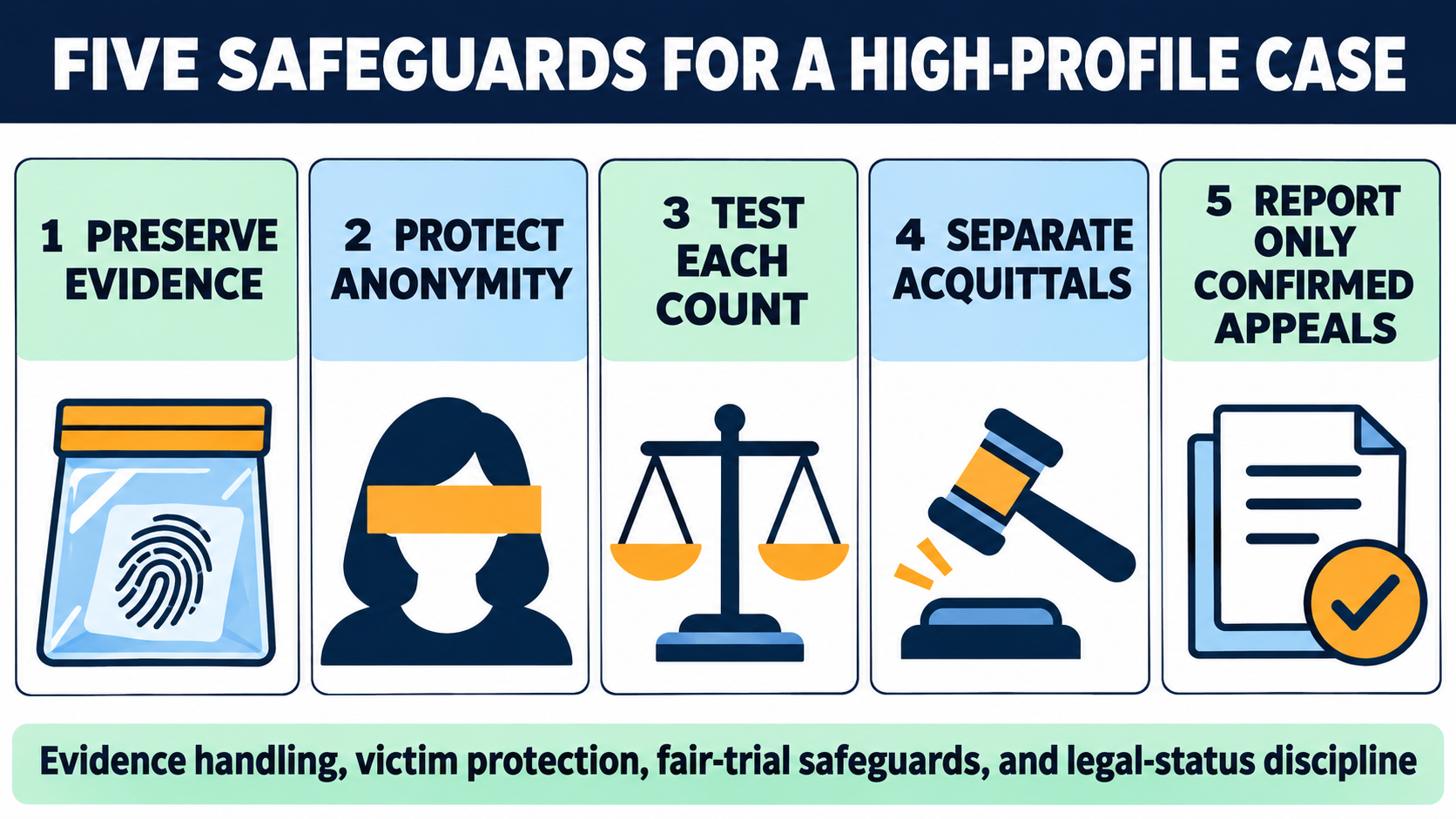
The split result is a core safeguard. Investigators and prosecutors may assemble a broad case, but jurors must decide each count separately. A sentencing judge may punish proven crimes; he cannot treat acquitted conduct as another conviction. Bennathan said he would disregard the 2023 documentary for sentencing purposes and would not take the acquitted allegations into account.
Reconstructing events after evidence has aged
The Metropolitan Police began investigating in September 2023. By then, the conduct at issue in the eventual convictions was between 14 and 19 years old. Police said there was no available forensic evidence or surveillance footage and that digital inquiries were limited by the passage of time. Those gaps made corroboration, chronology and disciplined documentation especially important.
Detectives said they traced and spoke with more than 100 witnesses, took more than 400 witness statements and reviewed more than 1,400 documents. They built timelines, obtained historical floor plans and photographs, and reviewed public performances, interviews, podcasts and books. This work was designed to test accounts and locate inconsistencies, not to replace the need for a jury to assess testimony.
For any institution investigating historical misconduct, the operational lesson is to separate evidence collection from reputation management. Records should be preserved under a clear protocol, witness accounts should be taken without coaching, and timelines should record what was known at the time. Public statements should not overclaim what the material proves.
Protecting complainants while preserving a fair trial
British law gives sexual-offense complainants lifelong anonymity. Police also assigned specialist officers and victim-support teams. Those protections reduce the risk that participating in a prosecution will expose a person to identification, intimidation or an avoidable second round of harm.
Anonymity also creates duties for publishers and social-media users. A name does not have to be printed for identification to occur. A combination of workplace, date, location, relationship and other details can point to a person. Responsible reporting therefore withholds unnecessary clues and avoids crowdsourced attempts to identify complainants.
The defendant’s fair-trial rights remained part of the same system. Brand denied the accusations and told the court the encounters were consensual. His lawyers challenged the prosecution’s evidence. The jury acquitted him on three counts, demonstrating that privacy protections for complainants do not eliminate the prosecution’s burden or require jurors to accept every allegation.
Power can become an operational risk
Prosecutors argued that Brand’s fame and influence created access to women and supported a belief that he could act without consequences. The judge similarly placed the offenses within Brand’s rise to celebrity. Institutions face added risk when a person’s commercial value, audience or proximity to senior leaders makes ordinary escalation less likely.
Channel 4’s internal review documented one such control failure. It found that a serious complaint by a staff member in 2009 was not properly investigated or escalated to senior management. The review did not find evidence that senior Channel 4 leaders knew the specific allegations later broadcast. Both findings matter: there was a breakdown, but the review did not establish universal institutional knowledge.
Effective safeguards include more than a generic conduct policy. Staff need multiple reporting routes, including an option outside the subject’s management chain. Serious complaints need a named owner, time-bound escalation, protected records and follow-up with the reporting person. Independent review becomes particularly important when a high-profile contributor can influence careers or revenue.
Limits on what the sentence proves
The sentence establishes punishment for four crimes. It does not prove every public allegation about Brand, every claim made in media investigations or every criticism of his former employers. Investigators have said their work remains open, but an open inquiry is not a charge, and a charge would not be a conviction.
The same caution applies to possible appeals and release calculations. At the final check for this draft, the reviewed sources did not establish that Brand had filed an appeal. A complete official sentencing transcript had not yet been published. News organizations should update release terms, count-by-count sentences or appellate status only from a court record or authoritative announcement.
Operationally, this prevents fast-moving coverage from turning speculation into a durable false fact. A newsroom should maintain a case ledger that distinguishes allegation, charge, verdict, sentence and appeal. Captions, summaries and infographics need the same status labels as the article body.
What institutions can take from the case
Historical cases are difficult but not automatically impossible. Investigators can test accounts through witnesses, contemporaneous disclosures, locations, archived records and a defendant’s own statements. The absence of recent forensic evidence increases the need for careful corroboration and transparent limits; it does not create a rule that testimony cannot be evidence.
For workplaces, early action is the more reliable safeguard. A well-handled complaint can protect people, preserve information and reduce the chance that misconduct continues behind status or access. A mishandled complaint can leave a worker isolated and make later fact-finding harder.
For courts and newsrooms, proportionality remains essential. The jury’s four guilty verdicts and three not-guilty verdicts should travel together in any accurate summary. That framing protects the integrity of the conviction, the meaning of the acquittals and the public’s ability to understand what the criminal process actually established.
A final safeguard is disciplined updating. When the written sentencing remarks, a formal appeal or a new charging decision appears, editors should revise every headline, box, caption and graphic from the same verified record. Partial updates can leave contradictory legal statuses on one page and create avoidable confusion about what the court has decided.

Explore Related Streets
Discover interconnected perspectives across the Knowledge Streets —each Street brings its own lens to the news landscape.

Robot Streets
Robot Streets explores AI systems, humanoid machines, automation breakthroughs, and how robotics is reshaping work, industry, daily life, and the global economy.

AI Streets
AI Streets explores artificial intelligence breakthroughs, everyday tools, emerging risks, practical guides, and how AI reshapes business, creativity, work, and society.

AI Home Street
AI Home Street explores how smart tech transforms everyday living—security, cleaning, cooking, automation, voice assistants, and practical tools that make modern homes easier and more connected.

AIMakeMyDay
Your daily boost of AI-powered ideas—fun prompts, creative tools, and smart shortcuts designed to entertain, inspire, and make everyday life easier.

Nova Streets
Nova Streets explores everyday software from a user’s point of view—productivity tools, creative apps, business platforms, and more. We break things down with clear, hands-on insights, no jargon, and practical guidance that helps beginners and pros make smarter software choices..

AI Business Street
AI Business Street reports on automation, productivity tools, AI startups, enterprise adoption, market disruption, regulations, and how artificial intelligence is reshaping the global economy.





More in News






Explore our other News related sites:
AIMakeMyDay
AI Business Street
AI Education Street
AI Health Street
AI Home Street
AI Streets
Politics Street
Government Streets
Constitution Street
Defense Street
News Street Network
