

On This Day in Lifestyles: January 11, 1908
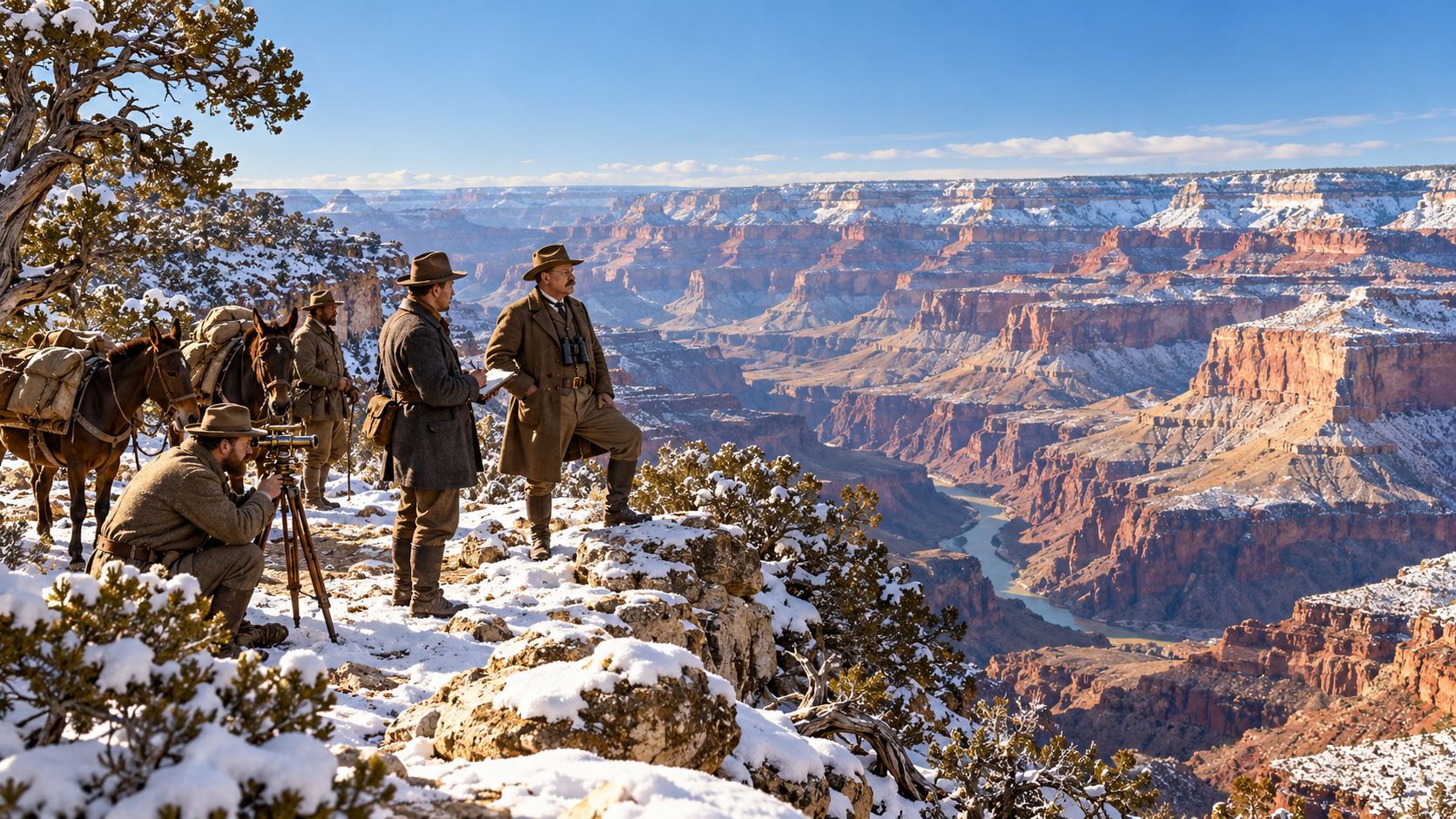
On January 11, 1908, President Theodore Roosevelt proclaimed more than 800,000 acres of the Grand Canyon a national monument. The action used the Antiquities Act of 1906, which allowed presidents to protect federal lands containing important scientific, cultural, or historic features. Roosevelt had visited the canyon in 1903 and urged Americans to preserve its immense scenery rather than spoil it through careless development. The proclamation did not create today’s national park, but it provided a powerful layer of federal protection at a time when mining claims, commercial proposals, rail tourism, and competing land uses were shaping the region’s future.
The canyon was never an empty wilderness awaiting discovery. Indigenous peoples have lived in and traveled through the region for thousands of years, maintaining homelands, trade routes, farms, sacred places, and deep cultural relationships with the landscape. Havasupai, Hualapai, Hopi, Navajo, Southern Paiute, Zuni, and other communities connect their histories to the canyon. Federal conservation policies often failed to respect those relationships and sometimes restricted Native access while celebrating scenic preservation. Understanding the 1908 proclamation therefore requires holding two truths together: it limited destructive commercial use, and it emerged from a system that frequently marginalized the people with the oldest ties to the land.
Protection also transformed how visitors encountered the canyon. Rail service to the South Rim, hotels, trails, viewpoints, and later automobile roads made the area accessible to a growing tourist public. The national monument became Grand Canyon National Park in 1919, and later boundary changes enlarged the protected landscape. Park managers built systems for lodging, transportation, interpretation, rescue, water, and waste while trying to safeguard wildlife, geology, archaeological places, and the experience of vast open space. Tourism brought jobs and regional income, but it also produced crowding and ongoing debates about development, river use, aircraft noise, and environmental limits.
For generations of travelers, the Grand Canyon has become both a destination and a reference point for scale: a place where family vacations, school lessons, photography, hiking, and personal reflection meet deep geologic time. Its protection helped establish the idea that certain landscapes should be held for shared public benefit rather than short-term extraction. Today that promise includes more honest interpretation of Indigenous history and greater consultation with affiliated tribes. The 1908 proclamation matters because it helped keep an extraordinary place substantially intact, while its unfinished legacy asks who defines preservation, whose stories visitors hear, and how public enjoyment can coexist with ecological and cultural responsibility.
Roosevelt used the 1906 Antiquities Act to proclaim Grand Canyon National Monument, protecting more than 800,000 acres of federal land.
The monument designation preceded the creation of Grand Canyon National Park in 1919 and helped resist development schemes that threatened the landscape.
Indigenous nations have cultural, spiritual, and practical connections to the canyon extending thousands of years before federal protection.
Early conservation frequently ignored Native rights and access. Modern interpretation increasingly acknowledges tribal histories and living relationships with the region.
Railroads, hotels, trails, and highways made the South Rim a major public destination and turned scenic tourism into an important regional economy.
Managers still balance visitor access with water limits, habitat protection, cultural resources, aircraft noise, crowding, and the integrity of the canyon experience.
Explore more of “This Day in Lifestyles”
Discover more moments in everyday life, design, education, travel, food, fashion, and culture. Each story connects a calendar date with an event that changed how people lived.